
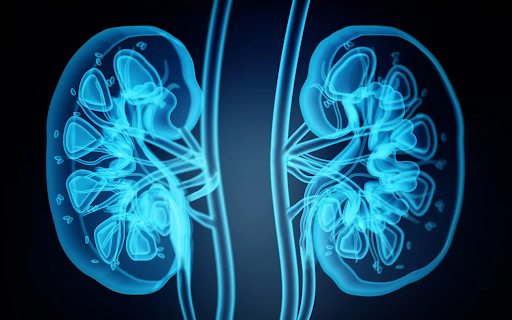
Before diving into high-tech models or cell lines, you will want a grip on what you’re up against. Kidneys, those purplish bean-shaped organs, handle your blood like an uptight host polishes silverware. Filtration, waste removal, and balancing chemicals, if anything jostles the routine, toxicity sneaks in. You might wonder what really counts as kidney toxicity. Picture cellular distress signals, ions drifting where they shouldn’t, or filters so overwhelmed they let through unwanted guests. For any treatment, your body’s first protest often starts here. You will find that scientists must decode subtle warnings, protein leaks, cell death, sodium mayhem. Clinical reality rarely matches textbook diagrams, so kidney toxicity models walk a tightrope between simplicity and the messy chaos of real life kidneys.
Toxicity doesn’t wait politely. Often it barges in as a side effect, trailing behind useful compounds. Sometimes, you will discover, toxicants act like double agents: painkillers spraying damage while dulling aches, antibiotics moonlighting as kidney agitators. The risk might tilt higher in children and the elderly. Your path to safer medicines winds directly through this curiously complex territory.
Table of Contents
Key Types of Kidney Toxicity Models
You can’t trial every new substance straight into a human volunteer. That’s where models step in, controlled, sometimes even elegant simplifications of reality. Let’s dip into the main categories.
In Vitro Models for Studying Kidney Toxicity
Petri dishes, pipettes, and an entire symphony of coloured liquids, you might think of in vitro as the artist’s blank canvas for toxicology. These models usually feature kidney cells arranged to mimic key functions: filtration, reabsorption, secretion. You will often see immortalised cell lines, primary cultures, even 3D organoids. The beauty? You will find that you can study subtle toxic changes, tinker with doses, or screen hundreds of chemicals quickly. These methods sometimes miss the orchestration you find in whole organs but shine at delivering rapid signals about what could go astray.
Tests like the MTT assay or transepithelial electrical resistance will help you measure cell death or barrier integrity in a snap. You might also explore gene expression shifts using qPCR, giving windows into early signs of trouble. In your quest for efficiency, you will see why high-throughput screening is now a staple tool for pharmaceutical labs.
In Vivo Models Used in Toxicological Research
Now, for a more complete symphony: in vivo models. Here, rodents or occasionally larger animals take the stage. You get the rich interplay of blood flow, immune responses, and real-time feedback between organs. In vivo research will help you catch far-reaching effects, edema, hypertension, subtle glomerular changes. Rats and mice are often the go-to performers, with their genetic similarities to humans and a remarkable knack for mimicking kidney injury seen in people.
Dosing regimens and monitoring tools, think creatinine tracking in blood, or histopathological scoring, anchor these models. You might learn that while these systems capture complexity admirably, they sometimes underwhelm in terms of cost, speed, and ethical considerations.
Emerging Technologies and Advanced Models
Yesterday’s petri dish now has competition. You will find that researchers are leaning into advanced models with almost poetic names, kidney-on-a-chip, microfluidic systems, and 3D bioprinted nephrons. These aren’t just laboratory curiosities. They promise your future medicines will face a more authentic test before they reach trials.
Kidney-on-a-chip models use flowing fluids to mimic the unique microenvironment of the nephron. You have the capacity to introduce blood flow, pressure changes, and precise gradients of toxins. In the case that you need to simulate long-term exposure, these chips let you monitor cellular behaviour over weeks instead of hours. Add in human-induced pluripotent stem cells and suddenly, your models echo patient diversity, something rodents never quite nail.
There’s also the rise of computational modelling. Imagine running thousands of drug variants through virtual kidney simulations overnight. It’s data-driven, predictive, and shrinking the experimental timeline drastically. If you crave fewer animal experiments and a real leap in both speed and nuance, you will keep an eye on these innovations.
Applications of Kidney Toxicity Models in Drug Development
You’re likely familiar with the long and winding road new drugs must travel. Kidney toxicity models are your early warning beacons along that route, whether you are screening wonder molecules or grappling with off-target effects.
During the preclinical phase, you can filter out troublemakers before they ever reach humans. You will see in vitro platforms rule the early rounds, swiftly exposing classic toxic patterns, mitochondrial dysfunction, oxidative stress, or altered ion channel behaviour. Where candidates shape up as promising, your in vivo and advanced models test them under more stressful conditions. Do they still hold up under the complexity of a living system?
These models also serve your regulatory goals. Agencies increasingly expect robust data on potential nephrotoxic risks, especially as kidney injuries are slippery and sometimes silent in early clinical settings. You might encounter case studies where kidney toxicity models have spared millions by axing a harmful compound before it ever failed dramatically in Phase 3 trials.
If you work at a biotech or pharma company, your teams rely on these models to predict and prevent drug-induced kidney problems, optimise dosing, and build safety profiles. In the end, they guide medicines past regulatory bottlenecks and gently shepherd risky compounds off the field before they can do real harm.
Challenges and Limitations of Current Models
You will find that every model draws boundaries somewhere. In vitro approaches capture a fragment of the story, cells act in peculiar ways alone, sometimes masking broader interactions. In vivo experiments, while richer, can’t always predict the nuances of human response. Species differences loom large; a rat isn’t someone’s gran on multiple medications.
Then there are ethical quagmires. You might see that, increasingly, the pressure grows to move away from animal models where possible. Parallel challenges arise in scaling advanced technologies; chips aren’t always available in bulk, and bioprinting can trip up on consistency across batches.
You might reflect on the constant balancing act between cost, throughput, and biological relevance. Many models struggle to fully capture the interplay of chronic disease, age, co-morbidities, or environmental influences. Even the sharpest simulation will underwhelm if you fail to validate against real-world clinical data. As you pursue the holy grail, perfectly predictive models, you will bump into logistical, financial, and technical snags that refuse a quick fix.
Wrapping Up
When you peer past the sterile surfaces and statistical graphics, kidney toxicity models are more like riddles wrapped in riddles than tidy answers. If you chase certainty, you might leave disappointed: these tools are more lighthouse than roadmap.
You will find that progress rarely advances in straight lines. New models spark excitement, old ones still have much to teach, and the line between cutting-edge and cautionary tale is as thin as a capillary. As long as kidneys matter to your health, and there are no signs that’s changing, you will want to keep your eye on these evolving science stories.