
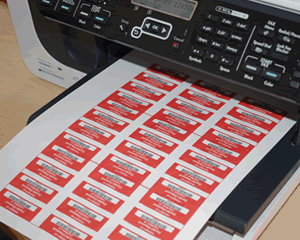
Reliable UPC EAN barcode systems are now important for store compliance and inventory control around the world. From creating one-of-a-kind codes to making expert labels that are ready for use right away, online platforms simplify the entire process. These services ensure compliance with international GS1 standards while doing away with the requirement for pricey software or printing tools.
Table of Contents
Technical Foundations of Barcode Label Systems
Barcode label printing online begins with precise symbology selection. EAN-13 codes contain 13 digits with nation prefixes, however UPC-A codes have 12 digits categorized as number system, manufacturer, product, and check digit. For sustained scanning at 10X magnification, both require exact height-to-width ratios (25.93mm × 37.29mm normal) and minimum X-dimensions of 0.264mm.
When scaled from receipt printers (203 DPI) to industrial applicators (600 DPI), digital platforms generate vector artwork in EPS and SVG formats without sacrificing quality. Quiet zones—clear area around codes—measure at least 2.23mm on each side, lowering reader misreads during high-speed checkout.
Streamlined Workflows for Professional Results
Current services include user-friendly platforms that allow customers to enter GTIN numbers, change measurements, and quickly evaluate layouts. Beyond black and white, color capabilities allow for the inclusion of brand colors while keeping 100% scannability through exact contrast ratios. Human-readable text is guaranteed to exactly match stored data thanks to OCR-B fonts.
Excel files with hundreds of SKUs are handled via bulk processing, which instantly makes variation suffixes and sequential numbering. For global printer compatibility, downloadable templates are offered in PDF/X-1a format, which works with both sheet-fed laser systems and roll-fed thermal printers.
Material Choices Impacting Label Performance
Label substrate selection determines durability across applications. While BOPP films (30 micron thickness) are resistant to moisture and chemicals in storage, paper types of 70–80 GSM are ideal for dry settings. Polypropylene is great for cold chain logistics since it can handle temperatures between -40°C and 80°C.
Permanent gums attach to corrugated surfaces, whereas removable adhesives protect reusable containers from waste. Under normal handling circumstances, thermal transfer ribbons make smudge-proof pictures that remain for 12 to 24 months.
Cost Structures Across Service Tiers
Volume and complexity needs are represented in pricing methods. While big sales of 5,000+ labels reduce to ₹0.75 per piece, single-label designs cost between ₹1 and ₹2 per item. For ₹3,000 to ₹15,000, based on number, premium choices include UPC EAN barcode production, custom artwork, and expedited shipping.
For ₹50–₹200 per design, digital-only options offer high-resolution files, making them ideal for companies using thermal printers. Die-cutting precision within 0.5mm tolerances and perforation spacing designed for movable applicators are features of physical printing.
Integration with Business Management Systems
Through CSV exports that include GTINs, dimensions, and print needs, generated labels easily interact with ERP systems. Inventory systems reduce inconsistencies during stock takes by instantly comparing digital data with physical labels. Barcode data is easily imported into product lists by e-commerce platforms, ensuring cross-marketplace checkout compatibility.
POS integration requires labels readable at 5-100cm distances with omnidirectional scanners. Variable data printing supports batch-specific information like manufacturing dates and expiry codes alongside primary barcodes.
Quality Assurance Guaranteeing Scanner Reliability
Every created barcode is twice validated: simulated scan tests establish reading across laser, CCD, and camera-based readers, and check digit math confirms encoding accuracy. Platforms guarantee 99.9% first-pass scan rates, which is important for high-volume retail settings handling more than 1,000 items per hour.
Every order comes with compliance paperwork attesting to compliance with ISO/IEC 15416 print quality standards and GS1 requirements. Platforms maintain databases preventing duplicate number allocation across global registries.
Choosing Partners for Long-Term Scalability
Online barcode label printing changes manual packing activities into automatic processes. Platforms that offer tiered pricing, quick proofs, and nationwide shipping within 72 hours are most beneficial to businesses that grow from 100 to 10,000 SKUs per month. Focusing on core activities instead on naming tasks is made possible by this efficiency.