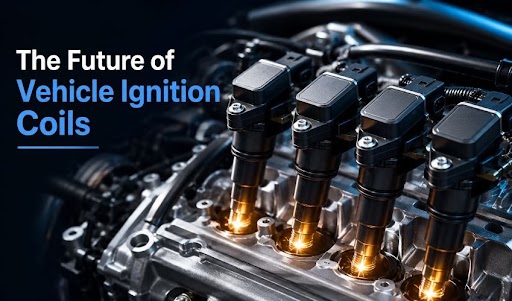
Industry Landscape And Growth Opportunity The automobile industry is experiencing massive technological shifts from various OEMs’ as there is continuous focus towards increased vehicle performance, fuel economy, endurance and emission control. Vehicle Ignition coil is another imperative part for an internal combustion engine in this industry. Vehicle ignition coil functions to convert the vehicle battery voltage to the high voltage necessary for sparking a spark plug and facilitate effective combustion and dependable functioning of the engine.
Global vehicle ignition coil market approximated about USD 6.29 billion in 2025, as per Expert Market Research industry figures and expected to rise owing to improved production of vehicle and replacement demand. Technological breakthroughs in engine systems contribute to driving the ignition coil market. OEMs are widely opting for a vehicle ignition coil to enhance spark timing and fuel economy along with engine performance in modern vehicles.
Owing to surge in fuel efficiency requirements and high standards for vehicular emission, companies in the industry are moving towards more robust, technologically efficient and compact designs for ignition coil for light and heavy commercial vehicles. The vehicle ignition coil market is anticipated to be around USD 9.40 billion by 2035, expanding at a CAGR of 4.10% during the forecast period of 2026-2035.
Rising vehicle ownership, steady replacement demand and upgrades in ignition technology are likely to drive overall growth of this market. Despite the increase in electric vehicles in the global market, ICE and Hybrid vehicles continue to form the majority of the automobile industry.
Table of Contents
Technological Advancements in Ignition Coil Systems
Like automotive engines, the technology used in ignition coils has improved over the years. Unlike earlier traditional ignition systems with mechanical controls, more recent engines use sophisticated electronic controls. With these, the electronic engine control unit can calculate the most efficient ignition timing, factoring in engine speed, temperature, load, and operating conditions.
These coil-on-plug systems integrate the coil-the part that delivers a strong electrical current to the spark plug-onto each spark plug, minimizing voltage loss and spark plug wire heat exposure, and optimizing performance.
As automotive manufacturers continue striving to produce more efficient engines, new innovations in coil design and implementation, such as higher- voltage and more-durable units, will play an increasingly critical role.
Growing Demand for Fuel-Efficient Vehicles
Automotive manufacturers and consumers have made fuel efficiency one of their top priorities. Soaring fuel costs, environmental factors, and government regulations mandate that car manufacturers begin coaxing more power and efficiency from every combustive cycle their engines achieve. Reliable spark performance to attain thorough, efficient combustion play an integral part in this drive towards improved efficiency.
Cutting-edge engine and ignition system designs use specific spark to keep engines in top-performing shape regardless of how the driver chooses to perform the task of getting from point A to point B.
This reality necessitates that car manufacturers develop ignition parts that can support the current automotive engine technologies, which feature everything from downsized turbocharged engines to engines with higher compression ratios.
Impact of Stricter Emission Regulations
Emission Rules – Emission rules for Automobiles: Ignition coils and ignition systems play a vital role in the functioning of emissions systems of automobile. Due to growing concerns around emission of CO2, CO and hydrocarbons, governments worldwide are framing stringent norms for emissions.
Thus it is expected that the demand for ignitions systems including coils would grow substantially in automotive manufacturing companies. To manage higher combustion efficiency which is required for lower emissions of Hydrocarbon (HC), Carbon Monoxide (CO)etc, ignition systems offering precisely defined &consistent sparks would be more in demand and will be driving the ignition coil market to grow at a significant rate.
Rise of Hybrid Vehicles
The trend toward hybrids marks a new landscape for ignition system suppliers As hybrid vehicles gain wider acceptance, they have set a new standard for how ignition systems behave. Hybrids have both an internal combustion engine (ICE) and an electric engine, which allows the ICE to stop running intermittently depending on the driving circumstances and the status of the hybrid’s battery.
Frequent stopping of the ICE, followed by another start of the engine, puts extra burden on ignition system parts. Therefore, hybrid vehicle ignition coils, particularly ignition coils in the hybrid’s engine, require robust performance in these continuous start/stop cycles. Many hybrid vehicles contain ICEs as well as electric powertrain systems, so they still need spark ignitions, creating new markets for designers of automotive ignition coil systems.
Replacement Demand Supporting Market Expansion
Vehicle Ignition Coil AftermarketThe aftermarket provides another huge business segment. The operating conditions under which the ignition coils often operate – heat and vibration – as well as continuous operation of a 12 volt power through them can cause internal components to degrade over time. An ignition coil in need of repair and replacement usually will result in poor acceleration and loss of engine power, as well as increased emissions and possibly a more costly catalytic converter repair if not addressed properly, difficulty in start-up.
An aging vehicle park guarantees increased demand. Increased and aging number of vehicles, globally, assures a steady demand into the aftermarket. An older vehicle does need ongoing care and repair work for continued safe and continued usage of the car, and thus creates demand for replacement auto parts.
Role of Advanced Materials and Manufacturing
Better materials are also enhancing the functionality of ignition coils. Suppliers are experimenting with various materials and insulation methods that can withstand higher electrical demands and higher temperatures. Advanced manufacturing techniques may further enhance consistency, while additionally decreasing weight and size.
Space saving ignition coils will have value within a modern engine compartment due to multiple components requiring space. Advanced manufacturing should enhance Customization as well. Suppliers will be capable of producing tailored ignition coils per specifications of engine format, vehicle type, and operating parameters.
Integration With Electronic Vehicle Systems
With most modern cars now integrated with linked electronic networks, ignition systems are moving further into engine management control system technologies. The engine will now have a controlling engine control unit which monitors conditions and will make appropriate ignition changes for best performance.
This enables the ignition to adapt to a change in engine load more readily and accurately information will be sent from all other sensor systems so that it’s able to assess exactly the right point for the ignition process. With modern networked vehicles this could evolve even more by looking into component performance further so that ignition units give accurate diagnostic information to technicians, identifying components before failure.
Challenges Facing the Ignition Coil Industry
Although there is a promising growth forecast for the automotive ignition coil market, there are several restraining factors. Widespread use of battery electric vehicles: a disruptive transition into vehicles that eliminate reliance on internal combustion ignition systems for energy ignition. Automobile manufacturers are pouring huge amounts of capital into electric vehicles: the market is expanding with heavy investments in electric propulsion, batteries, charging infrastructure, etc.
In an intensely competing electric powertrain market, demand for ignition coils could be significantly impacted in areas where electric vehicles continue to penetrate the automotive market. Internal combustion engines are projected to maintain their prominence as an acceptable form of vehicle propulsion throughout the coming years, though through conventional or hybrid vehicles which could give vehicle manufacturers time to adapt.
Future Opportunities for Manufacturers
Future for the automotive ignition coil industry-manufacturers ability to adapt to a new kind of vehicle will be crucial. By investing in research and development and by targeting needs such as more electrical capacity, greater endurance, heat resistance and smaller dimensions in their products-the industry can flourish. Developing coils for engines featuring turbochargers, high-performance cars, hybrid technology, and sophisticated combustion-engine development can lead to future development needs which companies that produce innovative coils can meet.
Existing, strong aftermarket sales-networks can be leveraged by manufacturers. Furthermore, advanced manufacturing processes and quality control can boost product reliability. Future component-supplied and engineered component supplier roles with well-formed engineering resources within organizations appear most promising within the automotive industry’s coming evolution.
Conclusion
In the vehicle ignition coil market, future growth trends largely depend on technological advancements in automotive manufacturing. Developments in fuel efficient engines, stringent emission standards, hybrid powertrains, electronic engine management and enhanced manufacturing will prompt innovation within ignition technology. While the advent of the Electric Vehicle (EV) could affect this market in the long run, the existing fleet and the demand for internal-combustion engine and hybrid vehicle are expected to provide an opportunity to ignition coil manufacturers for future gains in this market.
With the constant progress in automotive, the evolution of ignition coil systems will move towards accuracy, endurance, efficiency, and its compatibility with electronic control modules. Ignition coil manufacturers that could meet the demands and make use of novel ideas will be in good positions for this industry’s future progress.

