
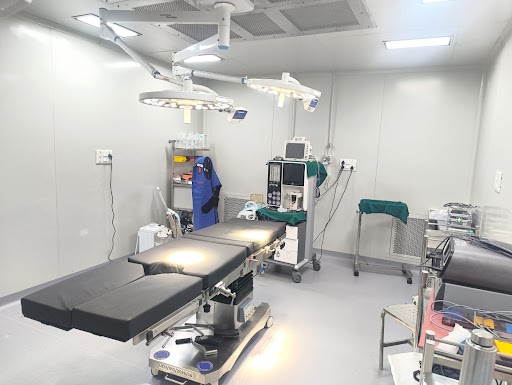
There’s a nursing home in a small town that has been running the same hydraulic table since 2009.
It has never been serviced. Not once. The foot pump still works, the column still holds, and the owner has no plans to replace it.
Meanwhile a much larger hospital I could name is on its second electric table in eleven years.
This isn’t an argument that hydraulic is better. It’s an argument that “better” is the wrong frame entirely.
Table of Contents
What hydraulic actually gives you
No dependence on the mains. That’s the headline, and in a lot of Indian towns it’s the whole story.
Beyond that: very few components that can fail, no actuator to burn out, no control board to replace, and a repair that a competent local technician can often handle without waiting for a part to travel. For nursing homes, day-care centres and theatres running mostly general surgery, an honest hydraulic OT table manufacturer will point you here rather than upsell.
Not because it’s cheaper. Because it’s the right machine for that case mix.
When hydraulic stops being enough
Fair is fair, though. There are theatres where a foot pump becomes a limitation.
High-volume lists where seconds of repositioning add up. Long orthopaedic and spine cases needing fine, repeated adjustment. Any setting where the circulating nurse can’t afford to move to the pump. Once you’re in that territory, an electric OT table manufacturer has the better answer — motorised actuators, handheld remote, height and trendelenburg and lateral tilt from a keypad without anybody breaking position.
And for the theatres in between, electro hydraulic exists precisely because the argument doesn’t have to be won by either side. Electronic control on top, hydraulic lift underneath. Ventek’s Amaze EH 5001 and EH 4001 sit in exactly that space.
The mistake that costs money
Buying the drive system your budget suggests rather than the one your surgeries require.
It happens in both directions. A day-care centre stretches for a fully electric table it doesn’t need, then can’t afford the attachments that would have let it run more procedures. A busy multi-speciality saves on a hydraulic table and spends the difference back in wasted theatre minutes across five years.
Any operation table manufacturer worth dealing with will ask about your case mix before quoting a model. If the first thing you get is a price list, that’s a supplier moving inventory.
What to check under the tabletop
The drive system is one decision. Build quality is a completely separate one, and cheap hydraulic tables exist too.
Look for rust-proof medical grade SS 304 rather than an unspecified “stainless steel”. Check the weld quality along the base if you get the chance — it’s usually visible. Ask what the patient load range genuinely is and how it was tested, because a table rated 250 kg on paper and one tested at 250 kg through a full range of movement are not the same product.
Ventek builds in SS 304 with a VentekSafe anti-bacterial coating aligned to NABH guidelines, a 50 to 250 kg load range, and a 48-hour non-stop failure check on every unit before dispatch. Details across the hydraulic, electric and electro hydraulic ranges are laid out on the hydraulic OT table manufacturer page.
C-arm and attachments still apply
People assume these questions only matter for electric tables. They don’t.
If you image during surgery, you need a radiolucent tabletop — 13 mm methoxy methyl melamine giving ≤1mmAL filtration, with clearance along the table length — and you need to verify it against your own C-arm, in your own room.
And attachments decide your procedure list regardless of drive system. Shoulder supports, arm boards, anaesthesia screen, kidney bridge, leg holders, spinal frame, orthopaedic traction. Buy the table bare and you’ll discover the gap six months later, usually when a department is promised a list it can’t actually run.
Judging the company
Same tests apply whichever drive system you choose. CDSCO manufacturing licence in hand, not a certificate photograph. ISO 13485, not just ISO 9001. Installations in your own state. And spare parts still available for a model sold ten years ago — the question that quietly separates genuine surgical table manufacturers from trading houses with good letterheads.
Among operation theatre table manufacturers in India, Ventek Care Pvt. Ltd. has eighteen-plus years behind it, 30,000+ installations, 1,150+ distributors, presence in 27 countries, and a 66,050 sq ft plant in New Delhi with its own R&D. CDSCO registered, US FDA listed, CE, BIS, ISO 13485 and GeM approved OEM.
So which one
Write down the ten surgeries your theatre will run most often this year. Count how many need fine repeated repositioning. Count how many happen when the power situation is unreliable.
The answer usually falls out of that list without much argument.
And if it comes out hydraulic — genuinely, that’s not a compromise. That nursing home from 2009 would tell you the same thing.