
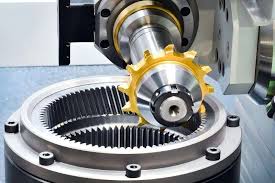
Since its origin, gear hobbing has been transforming the manufacturing sector and remains one of the most economical and effective ways to produce high-quality gear. We’ll go over some amazing advantages that gear hobbing offers to gear manufacturers in this blog post. Hobbing is used to cut splines and sprockets in addition to cutting gears. The efficiency of hobbing and gear cutting in general has significantly increased with the use of CNC machining. Now let’s see how this technology aids in the production of gears. So it is important to go with the gear hob cutter suppliers to order the right products.
Follow the right process:
Hobbing is the machining technique used to cut gears on a machine. One particular type of milling machine is the hobbing machine. A cutting instrument known as the hob applies a sequence of cuts that gradually erode the gear’s teeth into the underlying material. Compared to other gear-forming techniques, this method of producing gears is comparatively cheap and accurate. For this reason, hobbing is commonly employed in the gear manufacturing process. Until the required tooth depth is reached, the hob is fed up into the workpiece.
Hobbing machines come in a range of sizes and are also referred to as hobblers. These are completely automated devices that can manufacture a variety of goods, from industrial-sized gears to tiny instrument gears. Two skew spindles are used in hobbing machines; one is attached to the hob and the other to a workpiece. The type of gear being produced determines the angle between the workpiece and the hob’s spindle. The number of teeth on the workpiece is then determined by rotating these two shafts in a proportionate ratio.
Things to consider before buying:
Gear hobbing is one of the few methods that may be utilized to produce the same gear in the equipment manufacturing industry. Gear hobbing creates the teeth in both gears and splines using a specialized form milling machine and a tool called a hob.
- Flexibility
- Output
- Precision
- Speed
- Versatility
The cutting tool that the hobbler uses to make the teeth in the blank workpiece is called a hob. In addition to their cylindrical shape, hobs include helical cutting teeth with grooves along the length of them. These teeth aid in chip removal and cutting. Additionally, some goods, such as sprocket gears, require special hobs. The hob’s teeth resemble the teeth of a rack gear that would be employed with the finished product in terms of cross-sectional shape. Depending on the project’s requirements, both general-purpose and specially designed gear hob cutters are used.
Conclusion:
Because they are used to create gears with altered tooth profiles, the hobs that are specially produced for a given task are distinct. Every single hob tooth is eased on the back side to lessen friction, but the tiny changes in cross-sectional shape are only necessary for cutting. The majority of hobs are single-thread; however double- and triple-thread hobs are sometimes employed to boost output. Their sole drawback is that they could not be as precise as hobs with a single thread.