
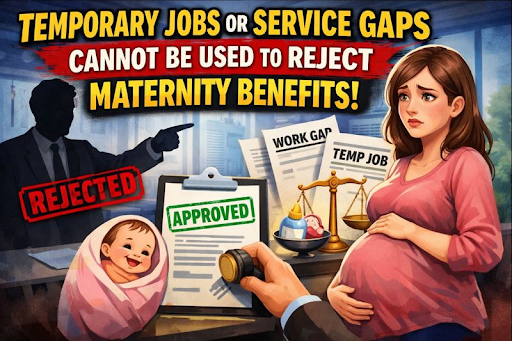
Maternity benefits provide essential financial and medical assistance to working women throughout their pregnancy and childbirth periods. Employers and insurers have increased their maternity claim denials because of existing policies which treat temporary employment and short-term contracts and work gaps as reasons to deny maternity benefits. The current legal framework together with developing insurance protocols establishes that employers should provide maternity benefits to workers who experience temporary job breaks or stop working for their organization. The current change supports the establishment of women’s rights together with the equal distribution of maternity insurance benefits which exists under contemporary Health Insurance systems.
Table of Contents
Understanding Maternity Benefits and Their Purpose
Maternity benefits exist to maintain women’s health and financial security and personal dignity throughout their pregnancy and childbirth and postnatal recovery periods. The benefits include financial support for maternity leave and hospital stays and childbirth costs and newborn care expenses and associated medical treatments. Women can experience their most critical life stage without worrying about financial obligations because maternity insurance exists to protect them from monetary difficulties.
Maternity-related coverage exists to ensure continuity of care, not to penalise women for career interruptions, which are often unavoidable. Women working in contract-based and gig-based industries face difficulties because their employment situation requires them to take short breaks and work temporary positions.
Rise of Temporary Jobs and Flexible Work Arrangements
The present workforce shows a completely different structure compared to past times. The present workforce includes temporary work positions and fixed-term employment contracts and freelance work and project-based employment to various job fields. Women frequently change their jobs because they need to care for their families or they have health issues or their employers lack maternity leave policies that enable them to stay employed during pregnancy.
The current labor market proves that companies should not use employment patterns to refuse maternity insurance coverage. Women maintain their right to medical coverage through Health Insurance policies and employment-based benefits even when service gaps occur according to court and regulatory decisions.
Why Service Gaps Occur During Pregnancy
Service gaps are not always voluntary. During pregnancy many women experience contract non-renewal and forced resignations and medical practitioners recommend they take rest. Women who work in dangerous environments usually prefer to exit those workplaces instead of continuing their work there. Women who work dangerous jobs prefer to exit those jobs instead of performing their work responsibilities.
The system punishes women for employment gaps that result from their need to take maternity leave. The foundation for legal challenges against maternity insurance benefit denials exists both from legal and ethical perspectives. Health Insurance coverage exists to safeguard health requirements and does not exist to determine which individuals maintain their employment.
Legal Perspective on Maternity Benefit Rejections
The courts in India and other regions have established that women possess maternity rights as statutory benefits which also serve as welfare rights. Maternity laws and insurance protections maintain their full rights for women through their maternity benefits and temporary employment status which permits them to take service breaks. The court rulings have established that pregnancy functions as a biological fact which exists outside the framework of employment. The employer must provide maternity insurance benefits when Health Insurance or employer-based Health Insurance is active during the eligible period.
Role of Health Insurance in Maternity Coverage
Health Insurance provides essential coverage for maternity expenses which have become more expensive because of increasing hospital charges. Many policies now include maternity insurance as an add-on or built-in feature, subject to waiting periods. Insurers must approve all claims after the waiting period ends because temporary employment status and previous service interruptions cannot be used as grounds for denial. Health Insurance contracts establish their primary focus on policy maintenance together with premium collection rather than tracking an individual’s work history.
Common Misconceptions Used to Deny Maternity Claims
Some insurers or employers claim that short-term employment diminishes a person’s eligibility to receive maternity benefits. Other people use service interruptions as evidence to demonstrate that someone has not maintained continuous work for a particular period. These interpretations are increasingly being rejected. The terms of maternity insurance policies together with existing legal rights determine coverage for workers based on their employment status. Service gaps become unimportant when premium payments are current and coverage remains active. Health Insurance providers need to evaluate claims through fair and open processes.
Impact on Women in Contract and Gig Roles
Women employed in contract positions experience the highest rates of maternity benefit denials. Women who work in non-permanent positions face greater rejection rates because they do not have permanent employment status. The recognition of maternity insurance rights for these women serves as a crucial element to achieve equality in the workplace. Health Insurance systems that neglect to acknowledge flexible work arrangements will exclude a significant portion of working women who require protection the most.
Importance of Policy Awareness and Documentation
Women should carefully review maternity insurance clauses in their Health Insurance policies. Waiting periods and coverage limits and claim documentation requirements must be understood to stop disputes which arise during delivery.
Employers must show proper service documentation while keeping complete records to prevent any service time discrepancies. Proper documentation and transparent communication methods enable efficient handling of maternity benefits without facing delays or rejections.
Employer Responsibility in Supporting Maternity Rights
Maternity protection laws need employers to take action for their enforcement. Maternity benefit denial brings legal consequences and reputational harm even when temporary employment exists. Progressive organisations now align their policies with maternity insurance standards and Health Insurance regulations. Pregnant employees receive support which leads to better employee retention rates and increased workplace morale and greater efficiency over time.
Regulatory Push Towards Inclusive Maternity Coverage
Maternity insurance and Health Insurance policies now require regulators to adopt more inclusive practices. The guidelines require insurers to treat all claim assessments equally while prohibiting any discriminatory behavior. The initiative seeks to create equal maternity benefits for all job categories while establishing health protection as a basic right which all employees should receive.
Financial and Emotional Impact of Claim Rejections
The denial of maternity benefits brings about serious financial burdens and emotional distress. The expenses linked to pregnancy medical treatment are large and denied claims create additional anxiety for patients who already face a critical life situation. Maternity insurance exists to reduce this burden. Health Insurance providers must act responsibly, recognising the human impact behind each claim.
Moving Towards Fair and Gender-Sensitive Insurance Practices
The practice of denying maternity benefits to workers who take temporary jobs or experience work interruptions demonstrates a failure to understand present-day employment standards. Current maternity insurance systems provide protection through their uninterrupted coverage system which does not require employees to maintain their job for the entire duration of their protection period. Health Insurance systems must adjust their operations to match new workplace requirements while maintaining their commitment to gender equality practices. The establishment of equitable maternity benefit access rights for all workers enhances public confidence in insurance companies while advancing general social welfare.
Conclusion
The combination of temporary employment and service interruptions should not be considered legitimate grounds to deny maternity benefits. The established legal framework together with insurance guidelines and moral standards supports this particular viewpoint. Maternity insurance serves as a protective measure for all employees but organizations treat it as a benefit reserved for their permanent staff members. The development of Health Insurance policies must prioritize their dedication to establishing accessible and just systems. Employment status should not determine maternity rights because women require proper support and medical care during this crucial period of their lives.