In cricket, the pitch plays a very important role in every match. The pitch is the central part of the ground where the bowler bowls the ball, and the batter tries to score runs. The condition of the pitch can change how the ball moves and bounces.
Some pitches help fast bowlers, while others suit spin bowlers or batsmen. Because of this, teams always check the pitch before the match starts. In this blog, we will explain the different types of cricket pitches and how they affect the game.
Table of Contents
What is a cricket pitch?
A cricket pitch is the middle strip of the cricket ground where the main action of the game happens. This is the area where the bowler bowls the ball, and the batter tries to score runs. The pitch is a flat surface made of hard soil and grass.
The length of a cricket pitch is 22 yards (20.12 meters). Wickets are placed at both ends of the pitch. The condition of the pitch is crucial because it affects how the ball moves, bounces, or spins during the match.
Types of Cricket Pitches
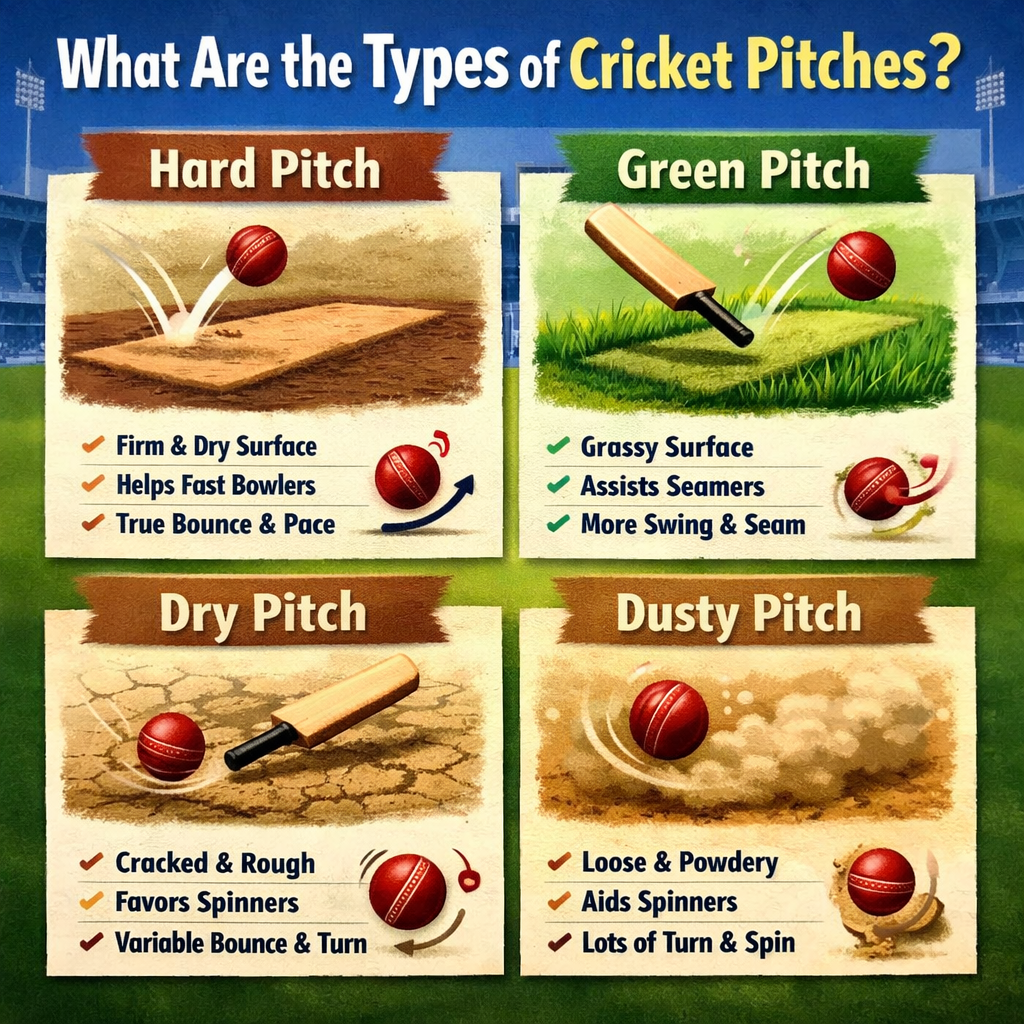
In cricket, the pitch can be different in every stadium. The type of pitch can change how the ball moves and how the match is played. Some pitches help bowlers, while some are better for batsmen. Below are the main types of cricket pitches.
Green Pitch
A green pitch has a layer of grass on the surface. Because of the grass, the ball moves more after hitting the pitch. This type of pitch usually helps fast bowlers because the ball can swing and seem more. Batting on a green pitch can be difficult, especially at the start of the match.
Dry Pitch
A dry pitch has very little moisture and looks dry on the surface.
Dry pitches often create an interesting contest between batsmen and spin bowlers. On these pitches, batsmen need good skill to play spin bowling well, and the pitch can sometimes play a big role in close situations like a Super Over.
Hard Pitch
A hard pitch is firm and solid. The ball bounces well on this type of surface, making it easy for batsmen to play their shots. Fast bowlers can also get good bounce, but overall, it is usually a good pitch for scoring runs.
Dusty Pitch
A dusty pitch has loose soil and surface dust. This pitch strongly helps spin bowlers because the ball can turn a lot. Batting becomes more difficult as the match goes on because the ball may spin sharply.
Dead Pitch
A dead pitch is very flat and slow. The ball bounces very little, and bowlers experience little movement. Because of this, bowlers find it challenging to take wickets, and matches on dead pitches can sometimes be slow or less exciting.
How Pitch Conditions Change During a Match
The condition of a cricket pitch does not remain the same throughout the match. As the game continues, the pitch slowly changes because of the weather, player movement, and the number of overs played. These changes can affect both batting and bowling.
At the start of the match, the pitch is usually fresh and smooth. The ball may bounce well, and fast bowlers can get some movement. This is why the first few overs can be challenging for batsmen.
As the match goes on, the pitch becomes drier and rougher. Footmarks from bowlers and batsmen start to appear on the surface. Because of this, spin bowlers may start getting more turn from the pitch.
In long matches like Test cricket, the pitch can also develop small cracks. These cracks can make the ball bounce unevenly, which makes batting more difficult. This is why bowlers often become more dangerous in the later stages of a match.
Tips for Players to Adapt to Different Pitch Types
In cricket, players must adjust their game based on the pitch conditions. Different pitches behave in different ways, so understanding the surface helps players perform better.
For batsmen, it is important to watch the ball carefully in the first few overs. Playing cautiously and leaving dangerous balls on green fields can be beneficial. Batsmen can play more attacking shots on hard pitches due to improved bounce.
The type of pitch should be matched with the bowler’s strategy. Fast bowlers can use pace and swing on green or tough pitches. On dry or dusty pitches, spin bowlers should concentrate on turning the ball.
For fielders, staying alert is crucial. On pitches with uneven bounce, the ball may move in unexpected ways. Quick reactions can help save runs and take catches.
Conclusion
Cricket pitches play a very important role in every match. The type of pitch can change how the ball moves, how bowlers perform, and how easily batsmen can score runs. That is why teams always study the pitch before the game begins.
Understanding the different types of cricket pitches helps players plan better strategies and makes the game more enjoyable for fans. When you know how a pitch behaves, it becomes easier to understand why a match is played in a certain way.
If you want real-time cricket data, match insights, and detailed statistics for your platform, Cricbex provides reliable cricket data solutions. With Cricbex, sports apps, fantasy platforms, and cricket websites can easily access accurate and fast cricket information.

