Corporate actions, whether mergers, acquisitions, stock splits, or dividend declarations, represent strategic decisions made by companies to influence their value and growth trajectory. One critical yet often overlooked aspect of corporate actions is the face value of shares. Despite the increasing complexity of financial markets and the emergence of modern metrics like the Volume Weighted Average Price (VWAP), the face value of shares continues to hold substantial importance in determining how businesses structure corporate actions effectively.
This article delves into the reasons why the face value of shares still matters in today’s corporate landscape, especially during corporate actions, and explores the interconnection between face value, Volume Weighted Average Price (VWAP), and EBITDA (Earnings Before Interest, Taxes, Depreciation, and Amortization), showcasing their roles in shaping a company’s financial strategy.
Table of Contents
Understanding Face Value in the Context of Corporate Actions
The face value of a share refers to its nominal or par value, which the company assigns to the share during its issuance. In simple terms, face value is the original amount of capital per share that investors contribute to the company. For example, if a company issues a share at a face value of $10, this denotes that the shareholder has contributed $10 to the company’s equity.
Although the market value—driven by supply and demand forces—typically overshadows face value in the trading sphere, face value plays an indispensable role during corporate actions. It becomes even more relevant when companies restructure their equity base, issue bonus shares, or declare dividends.
Why Face Value Remains Critical:
- Calculation Basis for Dividend Payments: Companies often determine dividends based on the face value of shares. A company may announce a 50% dividend on a face value of $5, equating to $2.5 per share for shareholders. This mechanism holds irrespective of the share’s market price.
- Stock Splits and Bonus Issues: During stock splits, companies divide larger shares into smaller denominations, reducing their face value. For example, a stock split in the ratio of 2:1 cuts the face value while doubling the number of shares. Such actions, aimed at increasing liquidity and affordability of shares for retail investors, rely directly on the original face value.
- Company Performance Metrics: Face value offers a baseline to measure equity capital before considering market dynamics. Even during financial reporting or valuation, companies use face value in calculations like share capital analysis.
The Role of Volume Weighted Average Price (VWAP) in Corporate Actions
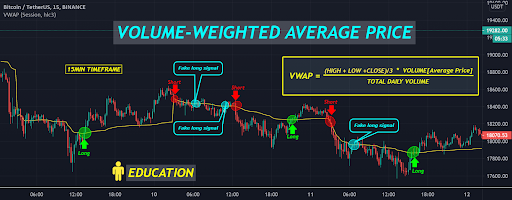
In the modern era, metrics like Volume Weighted Average Price (VWAP) have become vital in evaluating and executing corporate strategies. VWAP represents the average price of a stock traded throughout the day, adjusted for trading volumes. Essentially, it effectively marries price action and market liquidity, creating a dynamic and real-time valuation tool.
The intersection of VWAP with the face value of shares comes into play in several strategic corporate actions:
1. Share Buybacks
When companies repurchase their shares from shareholders in the open market, VWAP plays a crucial role. Companies use the VWAP to set buyback prices, ensuring that such repurchases happen at a fair valuation while considering the volumes traded. However, the face value is still relevant during this process because the repurchased shares retain their nominal value in the books, directly impacting equity capital reporting.
2. Merger and Acquisition Valuations
In merger or acquisition deals, VWAP acts as a benchmark for evaluating the market-defined value of a company’s shares while face value defines the contractual and regulatory foundation. A company undergoing an acquisition must consider the face value to determine share exchange ratios, while VWAP assists in ensuring market-based fairness.
3. Initial Public Offering (IPO) Pricing
When a company goes public, the investment bankers often use VWAP as an indicator of real-time investor sentiment. However, IPO pricing ultimately revolves around the face value of shares, which remains the statutory minimum value.
EBITDA and Face Value: Interdependence in Corporate Transactions
EBITDA (Earnings Before Interest, Taxes, Depreciation, and Amortization) has solidified its position as a prime performance metric for companies due to its ability to focus on core operations, excluding extraneous financial and accounting elements. While the apparent connection between EBITDA and face value may not seem obvious, the two metrics actually work in tandem during corporate actions.
How EBITDA Influences the Value of Face Value During Restructuring
- Profitability Signals: Companies with higher EBITDA can afford to pay dividends more generously, directly influencing investor returns based on face value. For example, if Company A announces a 100% dividend on a face value of $10, its EBITDA stability assures shareholders of consistent returns despite fluctuations in market value.
- Debt Decisions: Companies with strong EBITDA often undertake strategic debt-related decisions. These may include issuing bonds or convertible shares with specific face values. Strong operational earnings backed by EBITDA give financial institutions confidence to structure debt-based instruments alongside equity components.
- Valuation Multiples: Face value often serves as a foundational metric in valuation formulas, especially when combined with profitability measures like EBITDA. Financial analysts estimate a company’s market capitalization by multiplying its operational EBITDA figure with relevant industry multiples and then distribute this value across issued shares, amplified by their face value.
Reconciling Traditional Metrics Like Face Value with Modern Market Indicators
In an increasingly data-driven financial world, metrics like VWAP and EBITDA have risen to prominence, offering investors and corporate leaders deeper insights into business efficiency, market sentiment, and liquidity trends. Nevertheless, face value maintains its role as a cornerstone for equity structuring, particularly during material corporate actions that stress statutory compliance and shareholder transparency.
For instance, VWAP helps companies assess stock value during time-sensitive transactions, while EBITDA offers insights into operational profitability for executing mergers or bonus share issues. However, without the regulatory clarity and standardized baseline set by face value, these metrics may lose their coherence in defining corporate-level actions.
Case Study: Synergy of Face Value, VWAP, and EBITDA in M&A Transactions
Consider a hypothetical scenario involving two companies, Company X and Company Y. Company X, deemed the acquirer, wishes to merge with Company Y. Here’s how face value, VWAP, and EBITDA interplay throughout this process:
1. Valuation Assessment
Analyzing Company Y’s price based on EBITDA provides Company X with insight into operational profitability. EBITDA helps calculate the deal’s total valuation—the power behind gauging the premium being paid.
2. VWAP Helps Establish Market Price
After settling on an EBITDA-derived valuation, the acquirer may use the VWAP to set a fair market price per share of Company Y’s stock. VWAP ensures that acquisition offers align closely with real investor expectations.
3. Share Exchange Ratio Based on Face Value
Ultimately, the ratio at which Company X exchanges its shares for Company Y shares will depend on the face value of each company’s shares alongside market valuation. This synergy between market-driven metrics and nominal values ensures smooth execution.
Conclusion: A Constant Amidst Transformative Markets
The face value of shares withstands the test of time as an irreplaceable metric, especially during corporate actions, setting a stable baseline amidst rapidly evolving market dynamics. Leveraging modern market indicators like Volume Weighted Average Price (VWAP) and EBITDA has revolutionized corporate finance, enabling data-driven decisions. Still, face value remains indispensable as the backbone of equity structuring and regulatory compliance.
For analysts, investors, and corporate leaders, understanding the interplay between face value, VWAP, and EBITDA is crucial to navigating mergers, acquisitions, share buybacks, and other corporate actions. The coexistence of traditional and modern financial metrics underlines the importance of approaching corporate actions holistically. As financial markets grow increasingly sophisticated, the ability to integrate metrics like VWAP with face value will continue to define the trajectory of corporate financial strategy, guiding businesses toward greater transparency, efficiency, and market stability.

