
A young architect in Karnal was finishing drawings for a family home when the contractor called with a simple question. “Sir, 3 hole or 8 hole?”
She paused. Both were machine made. Both were clay. Both looked almost the same from the outside once they were in a wall.
So does the number of holes really matter? A little, yes. But probably not in the way most people think.
Table of Contents
What are 3 hole bricks?
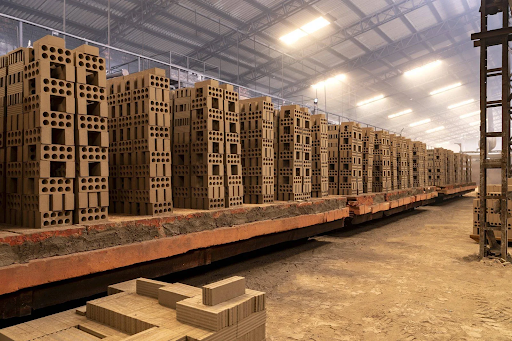
3 hole bricks are burnt clay bricks with three vertical holes running through them. They are usually machine made, with a uniform size and clean faces, and are widely used for both plastered and exposed brick walls. With fewer holes, they keep more solid clay in the body of the brick.
What is an 8 hole brick?
An 8 hole brick is also a burnt clay brick, but with eight smaller vertical holes arranged in a pattern. These are often called 8 hole perforated bricks. The extra perforations remove more clay, which usually makes the brick lighter for the same outer size.
The main differences
Weight is the most obvious one. Because bricks with 8 holes generally have more clay removed, they tend to be lighter. On a large building, that lower weight adds up and reduces the load on the structure.
Mortar grip is another. Both types let mortar push into the holes and form small keys between courses. With more holes, there are more of these keys spread across the brick.
Insulation is slightly different too. More air pockets can mean slightly slower heat transfer through the wall, though the actual difference depends on the full wall design, plaster and thickness.
Strength is where people get confused. It’s easy to assume fewer holes always means a stronger brick. In reality, strength depends far more on the clay, the pressing and the firing than on the number of holes. A well-made 8 hole brick can be stronger than a poorly fired 3 hole brick. Always ask for test results instead of guessing.
Handling on site can vary as well. Some masons prefer fewer, larger holes when cutting bricks into halves or quarters for corners and openings. Others don’t notice much difference. It really comes down to the team’s habits.
So, when should you choose which?
There’s no single right answer, but a few patterns show up on real projects.
8 hole bricks are a popular choice for general walls where reducing weight matters, like upper floors of framed buildings or long internal and external walls.
3 hole bricks are often chosen when a builder wants a little more solid clay in each brick, or simply because that’s what the local masons are used to working with. They’re also common in exposed brick work where the holes stay hidden inside the wall.
For load-bearing walls, let your structural engineer decide based on the tested strength of the specific brick, not the hole count alone.
Cost is usually close between the two, though it varies by manufacturer and region. Since 8 hole bricks use slightly less clay, some buyers expect them to be cheaper, but the price depends more on the brand, finish and quality grade than on the holes. Compare full quotes, including transport, rather than assuming.
What matters more than the number of holes
Here’s the honest truth. A good brick is a good brick, whatever its hole pattern.
Check that the size is uniform. Look for cracks in the thin walls around the holes. Tap two bricks and listen for a clear ring. Ask how much water the brick absorbs. And confirm that the whole order will come from a steady, consistent production batch, especially for exposed walls.
If a supplier offers you a cheap brick with the “right” number of holes but can’t answer these basic questions, the holes are the least of your worries.
Choosing a reliable manufacturer
Whether you choose 3 hole bricks or 8 hole bricks, buying from an experienced manufacturer gives you better consistency and fewer surprises on site.
For buyers in Haryana, Punjab and nearby regions, Mahaluxmi Bricks is a manufacturer with more than four decades in clay products. Established in 1982 and ISO 9001 certified, the company offers exposed wirecut bricks, hand moulded bricks and special shapes. Whether your drawings call for 3 hole bricks or 8 hole ones, their team can guide you on the right product.
Back to that phone call
In the end, the architect in Karnal checked the strength reports for both options, spoke to the structural engineer and went with 8 hole bricks for most walls because of the lower weight. For a couple of exposed feature walls, the contractor used 3 hole bricks his team was comfortable cutting.
Both worked. Because both were good bricks.