
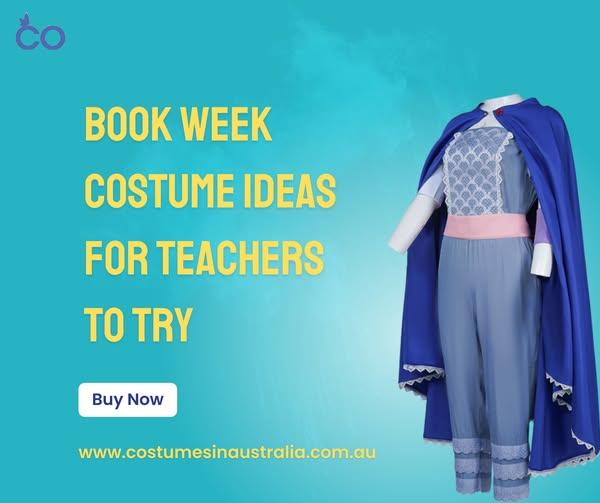
When Book Week rolls around, schools transform into vibrant landscapes of creativity and imagination. While students eagerly anticipate dressing up as their favourite characters, it’s the educators who often set the tone with Book Week costumes for teachers. A well-thought-out costume worn by an educator can ignite excitement, model a love for reading, and encourage deeper connections to literature. But forget the usual suspects – it’s time to think beyond the classic witches, wizards, and red-caped heroines. Let’s explore costume ideas that are not only innovative but also rich in storytelling potential and meaningful inspiration.
Storytelling in Motion: Costumes That Invite Conversation
The best teacher costumes during Book Week do more than just look the part – they spark curiosity. Imagine a teacher dressed as the anthropomorphic character from The Day the Crayons Quit, holding props that represent each crayon’s “letter.” Students are not just impressed by the costume – they’re drawn into the plot, engaging in spontaneous discussion about character perspective and narrative voice.
Another standout is going as a “walking book cover,” where a cardboard or fabric tunic is transformed into the illustrated cover of a beloved or obscure book. Pair it with a speech bubble prop displaying a quote from the story, and you’ve created an interactive costume that practically begs for questions: “What’s this book about?” or “Why did you choose that quote?” These costumes make reading visible and tangible.
Group Themes for Team Teaching Impact
For schools with multiple educators willing to collaborate, group costumes can deliver a punch of coordinated storytelling. A team of teachers might become the characters from Inside Out, representing different emotions – joy, sadness, anger, fear, and disgust – each holding up signs quoting emotional moments from student-loved books. Not only is it visually fun, but it opens conversations about character development and emotional literacy.
Alternatively, staff might portray the characters from The Wizard of Oz, but with a twist: each character could represent a different genre – Dorothy as fiction, Scarecrow as historical fiction, Tin Man as sci-fi, and the Lion as mystery. It’s quirky, educational, and gets students thinking about genres in a new way.
Minimal Effort, Maximum Impact
Not every teacher has hours to spend crafting a costume, but creativity doesn’t need to be time-consuming. Try dressing as a punctuation mark or literary device. For instance, a teacher could tape printed metaphors or similes across their clothing and introduce themselves as “Figurative Language.” Another might don a superhero cape and become “Grammar Girl,” rescuing sentences in distress.
Costumes That Celebrate Diverse Literature
Teachers also have the unique opportunity to shine a light on underrepresented voices during Book Week. Choosing to embody characters from multicultural or lesser-known books not only educates students but also makes a powerful statement about inclusivity. Dressing as Mufaro’s daughters or as the protagonist from Last Stop on Market Street shows commitment to broadening students’ literary horizons.
Another idea is to become a “living bookshelf,” where the teacher wears a jacket or vest attached with small covers of books from diverse cultures and genres. Every step through the hallway becomes a literary recommendation in motion.
Student-Inspired Creations
Want to go a step further? Let your students choose your costume based on a class vote or reading challenge. If they read a certain number of pages or complete a literary activity, they earn the right to decide your Book Week identity. This approach not only motivates reading but builds anticipation and gives students a sense of ownership in the celebration.
Final Thoughts
When educators participate enthusiastically in the event with Book Week costumes for teachers, they send a message louder than any morning announcement: reading matters, imagination is power, and books are worth celebrating. A well-chosen costume can spark joy, encourage exploration, and connect students to the literary world in lasting ways.