
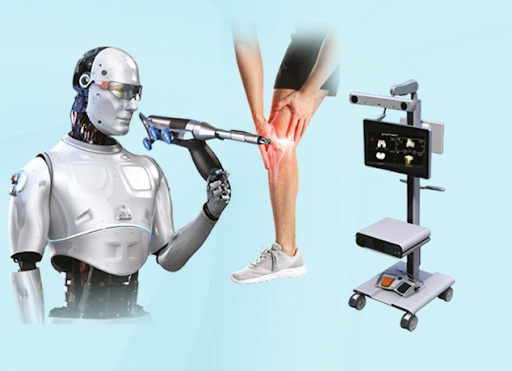
Knee replacement surgery has changed significantly with advances in surgical technology. Robotic knee replacement supports surgeons with detailed planning and controlled execution during complex joint procedures. The approach focuses on accuracy, consistency, and patient-specific treatment. As expectations around recovery and long-term joint performance rise, many orthopaedic teams now consider robotic systems as a practical way to improve surgical outcomes and patient experience.
Table of Contents
Understanding Robotic Knee Replacement
Robotic knee replacement uses advanced imaging and computer guidance to assist surgeons throughout the procedure. Before surgery, detailed scans create a three-dimensional model of the patient’s knee. This model allows the surgeon to plan bone cuts, implant size, and alignment with greater clarity. During surgery, the robotic system helps the surgeon follow this plan while retaining full control of every movement.
How Does Precision Improve During Surgery?
Improved precision remains one of the strongest advantages of robotic-assisted techniques.
Accurate Planning and Alignment
Traditional knee replacement relies heavily on manual instruments and visual judgement. With robotic knee replacement the surgeon works with real-time data that reflects the patient’s anatomy. This support allows accurate implant positioning and balanced joint alignment. Proper alignment helps the artificial joint move more naturally and reduces uneven stress on surrounding tissues.
Controlled Bone Preparation
Robotic assistance guides bone preparation within predefined boundaries. The system alerts the surgeon if movements extend beyond the planned area. This control protects healthy bone and soft tissue while maintaining surgical accuracy. As a result, surgeons can achieve consistent results across different patient anatomies.
Impact on Recovery and Early Outcomes
Precision during surgery often influences how patients feel and move afterward. Patients who undergo robotic knee replacement often report reduced post-operative pain and swelling. The controlled approach limits unnecessary tissue disruption, which supports faster rehabilitation. Many patients regain movement sooner and progress more confidently through physiotherapy programs. Shorter hospital stays may also occur when early mobility improves.
Long-Term Joint Performance
Surgical accuracy also plays a role in how well the joint performs over time. Correct implant placement supports even load distribution across the knee. This balance may reduce wear on the artificial joint and surrounding structures. While research continues to assess long-term data, improved alignment consistently links to better functional stability. Surgeons consider these factors when discussing treatment options with patients seeking durable joint outcomes.
Choosing the Right Surgical Expertise
Patients often consult both knee and hip specialists when considering joint replacement options. A hip surgeon in Adelaide may work closely with knee specialists to assess overall joint health and movement patterns. In some cases, a hip surgeon helps evaluate how hip alignment influences knee mechanics. Collaboration across specialties ensures treatment plans consider the entire lower limb, not just the knee.
When Does Robotic Knee Replacement May Be Considered?
Not every patient requires robotic assistance, but certain factors influence suitability. A hip surgeon in Adelaide or an orthopaedic specialist may recommend robotic knee replacement for patients with complex anatomy or alignment concerns. Younger patients and those with active lifestyles may also benefit from the precision offered by robotic systems. Clear discussions help patients understand potential benefits and limitations before surgery.
Conclusion
Robotic knee replacement improves surgical precision through detailed planning, controlled execution, and real-time feedback. These factors support better alignment, smoother recovery, and reliable early outcomes. When combined with experienced surgical care, including guidance from a hip surgeon in Adelaide, robotic assistance helps customise treatment to individual needs. As evidence continues to grow, precision-focused approaches remain central to modern joint replacement care.