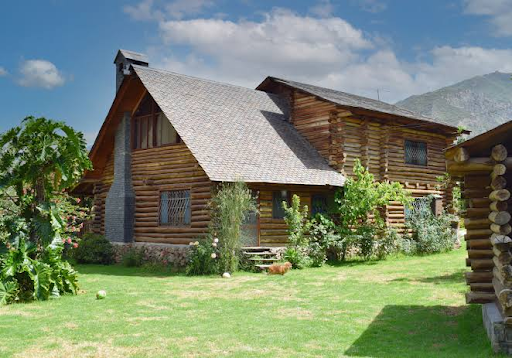
When most people imagine building a wooden structure — whether a backyard pavilion, a pergola, or even a small outbuilding — they picture a process that involves hammers, nail guns, and metal hardware at virtually every connection point. The idea that a substantial timber structure could be assembled without any of these elements seems, at first consideration, implausible. Yet traditional timber framing has been doing exactly that for centuries, and modern engineering has made this approach more accessible, more precise, and more practical than ever.
Table of Contents
The Problem With Hardware-Dependent Construction
Conventional construction relies heavily on metal fasteners — nails, screws, bolts, joist hangers, hurricane ties — to connect structural members and transfer loads through a building. This approach works, but it comes with inherent limitations.
Metal hardware is subject to corrosion, particularly in outdoor applications exposed to moisture and temperature cycling. Over time, corroded fasteners lose their holding strength, and the damage is often invisible until it has progressed significantly. Metal connectors also create thermal bridges in insulated assemblies and, in timber framing, can concentrate stress in ways that cause splitting or checking in the wood members they are connecting.
How a Wooden House Kit No Nails System Works
The answer to these limitations lies in the oldest joinery traditions in timber construction. A wooden house kit no nails system relies on precisely cut wood-to-wood connections — primarily mortise and tenon joints, dovetail connections, and wooden pegs — that transfer structural loads through the geometry of the joint itself rather than through the shear strength of a metal fastener.
In a dovetail-based no-nail system, the characteristic fan-shaped tail fits into a precisely cut mortise, and the geometry of the connection means that the joint actually tightens under load rather than loosening. This is the same mechanical principle that has kept timber frame buildings standing for centuries in Japan, England, and Scandinavia — and modern CNC machining can produce these joints with a level of precision that exceeds what hand-cutting alone can consistently achieve.
Heavy Timber Post Alignment System: Precision Assembly Without Hardware
One of the practical challenges in hardware-free timber construction is ensuring accurate alignment of large, heavy members during assembly. The heavy timber post alignment system addresses this challenge by using the joint geometry itself as a guide — each mortise and tenon connection is oriented so that the pieces naturally index into the correct position as they are assembled.
In a well-designed no-nail system, the assembly sequence is engineered so that each connection is accessible in the correct order, and the pieces guide each other into position without requiring external alignment tools or multiple workers to hold members in place. This makes the assembly process not only hardware-free but genuinely manageable for small crews or skilled owner-builders.
Can I Build a Pergola Without Anchor Bolts?
A common question for homeowners considering hardware-free timber structures is whether a pergola or pavilion can be built without anchor bolts connecting the structure to its foundation. The answer depends on the specific structure, the site conditions, and the local building code requirements.
In many cases, a well-designed timber frame structure can transfer lateral loads and resist wind uplift through the weight of the timber itself combined with the mechanical resistance of its joinery system — without requiring anchor bolts at every post base. However, local jurisdictions vary in their requirements, and a structure that is not anchored to its foundation must still demonstrate through engineering that it can meet the code-required wind and seismic loads for the site.
The short answer is that hardware-free above-grade construction is absolutely achievable, but foundation connections may still be required by code and are often the most practical way to ensure the structure performs as intended in extreme weather events.
Simple Wood Pavilion Non-Nail Connection: Real-World Performance
For homeowners who are considering a simple wood pavilion non-nail connection system for a backyard structure, the performance record of traditional timber joinery in real-world outdoor applications is highly reassuring. Timber frame structures built using traditional mortise-and-tenon and dovetail joinery routinely outlast conventionally framed structures by significant margins — not because wood is inherently more durable than metal, but because the joint geometry distributes load more evenly and avoids the stress concentrations that cause premature failure in hardware-dependent connections.
Conclusion
The wooden house kit no nails concept represents a meaningful evolution in how outdoor timber structures can be designed, fabricated, and assembled. By returning to the joint geometry that has proven its value across centuries of timber construction — and refining it with modern fabrication precision — these systems deliver structures that are stronger, longer-lasting, and more visually honest than their hardware-dependent counterparts. For homeowners and builders who value craftsmanship and durability, the no-nail timber system is worth serious consideration.

