Table of Contents
Introduction
Getting enough protein on a plant-based diet is easier than most people think. The best vegan protein sources are not only rich in nutrients but also support muscle growth, energy, and overall health. Whether you are vegan, vegetarian, or just trying to eat more plant-based foods, choosing the right protein sources is important.
In this guide, you will learn about the top vegan protein foods, their benefits, and how to include them in your daily diet.
Why Vegan Protein Sources Are Important
Protein is essential for:
- Building and repairing muscles
- Supporting immunity
- Maintaining healthy skin and hair
- Providing energy
Many people believe plant-based diets lack protein. But the truth is, there are many high-protein vegan foods available.
Best Vegan Protein Sources You Should Include
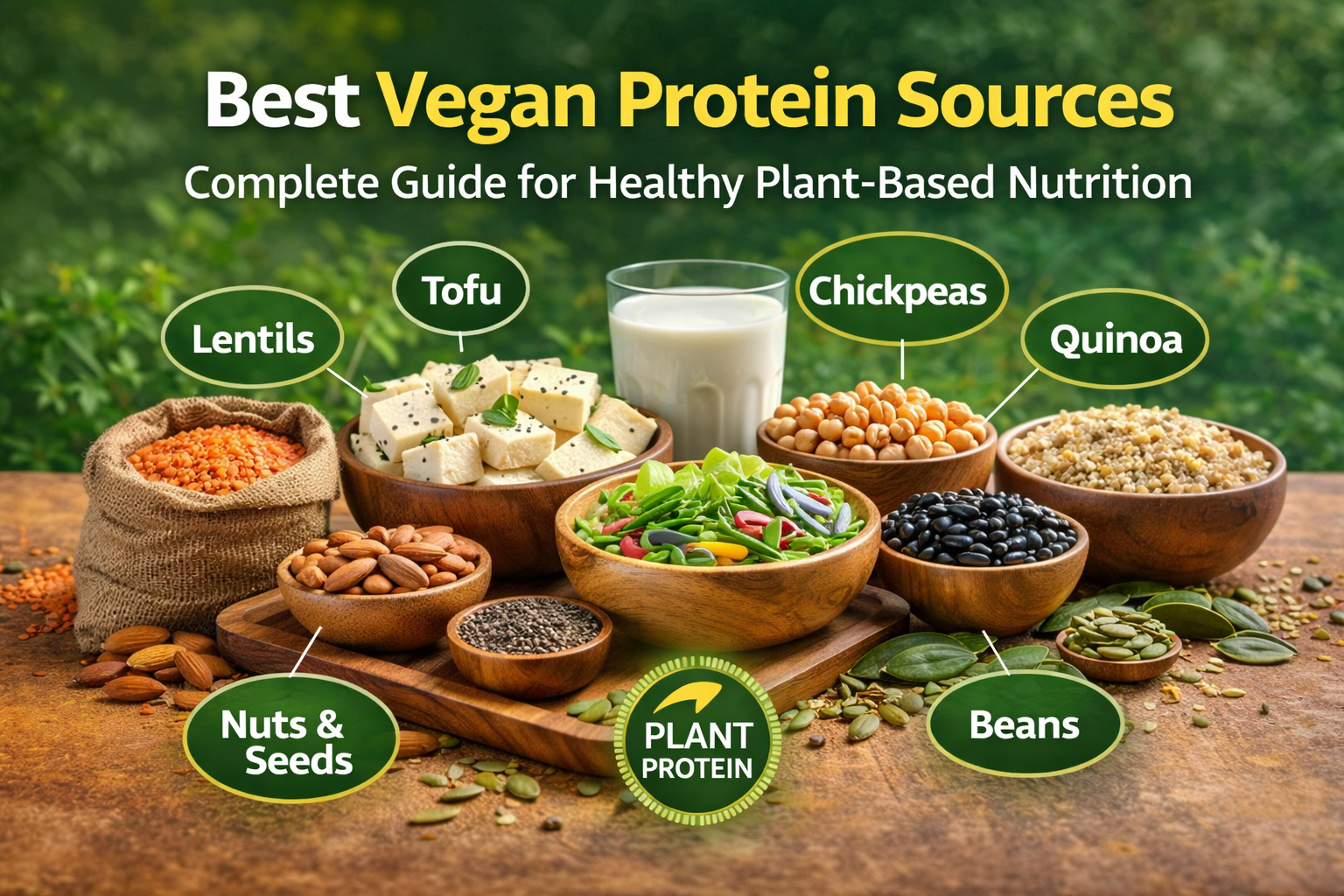
1. Lentils (Dal)
Lentils are one of the most affordable and powerful vegan protein foods.
- Protein: ~18g per cup
- Rich in fiber and iron
- Easy to cook
Great for daily meals like dal and soups.
2. Chickpeas (Chana)
Chickpeas are versatile and tasty.
- Protein: ~15g per cup
- Supports digestion
- Good for weight management
Use in salads, curries, or hummus.
3. Tofu
Tofu is made from soybeans and is a complete protein.
- Protein: ~20g per cup
- Contains all essential amino acids
- Low in calories
Ideal for stir-fries and curries.
4. Quinoa
Quinoa is a complete plant protein.
- Protein: ~8g per cup
- Gluten-free
- Rich in magnesium
Perfect for healthy bowls.
5. Nuts and Seeds
Examples:
- Almonds
- Chia seeds
- Pumpkin seeds
Benefits:
- High protein
- Healthy fats
- Good for heart health
6. Beans (Rajma, Black Beans)
Beans are rich in protein and fiber.
- Protein: ~15g per cup
- Keeps you full longer
7. Soy Products (Soy Milk, Tempeh)
Soy-based foods are among the best vegan protein sources.
- High protein content
- Good for muscle growth
Protein Comparison Table (Vegan Foods)
| Food Item | Protein (per cup) | Benefits |
|---|---|---|
| Lentils | 18g | High fiber, budget-friendly |
| Chickpeas | 15g | Good for digestion |
| Tofu | 20g | Complete protein |
| Quinoa | 8g | Gluten-free |
| Black Beans | 15g | Keeps you full |
| Almonds | 6g | Healthy fats |
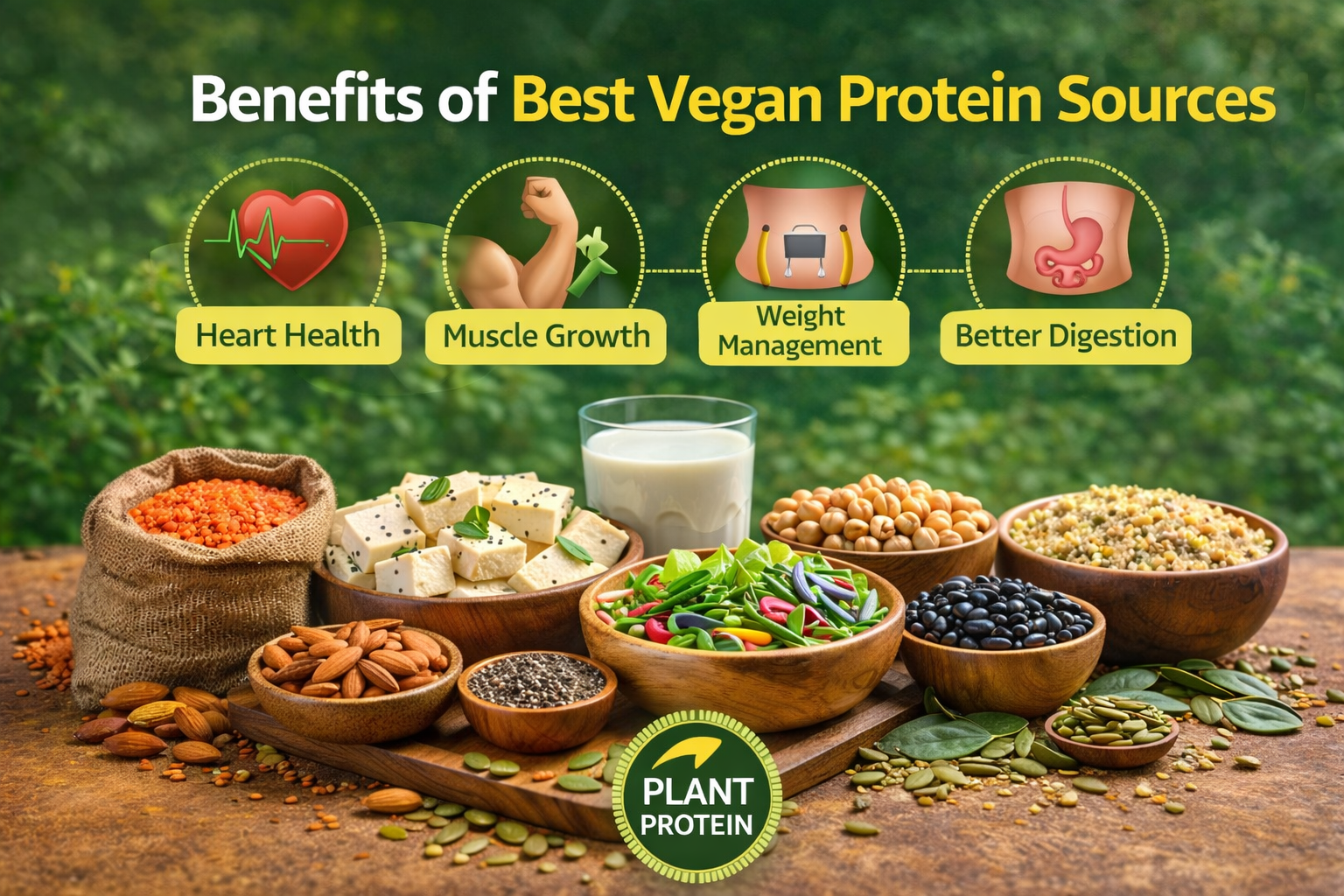

Benefits of Best Vegan Protein Sources
1. Heart Health
Plant proteins reduce cholesterol levels.
2. Weight Management
High fiber keeps you full longer.
3. Better Digestion
Most vegan protein foods are rich in fiber.
4. Lower Risk of Disease
Plant-based diets reduce risk of diabetes and heart disease.
How to Get Enough Protein on a Vegan Diet (Step-by-Step)
Step 1: Include Protein in Every Meal
Add lentils, beans, or tofu to your meals.
Step 2: Mix Different Protein Sources
Combine grains + legumes (e.g., rice + dal).
Step 3: Snack Smart
Choose nuts, seeds, or protein smoothies.
Step 4: Use Soy Products
Include tofu or soy milk daily.
Step 5: Track Your Intake
Make sure you meet your daily protein needs.
Tips to Improve Protein Intake
Eat a variety of foods
Plan your meals
Use protein-rich snacks
Add seeds to smoothies
Choose whole foods over processed
Common Mistakes to Avoid
Eating only carbs (rice, bread)
Not planning meals
Ignoring protein intake
Relying only on one source
Balance is key.
FAQs
1. What are the best vegan protein sources?
Lentils, chickpeas, tofu, quinoa, beans, and nuts are among the best vegan protein sources.
2. Can vegans get enough protein?
Yes, with proper planning, vegans can easily meet protein needs.
3. Is tofu a good protein source?
Yes, tofu is a complete protein with all essential amino acids.
4. How much protein do vegans need daily?
It depends on body weight, but generally 0.8–1g per kg.
5. Are plant proteins better than animal proteins?
Plant proteins are healthier for heart and digestion.
Internal Linking Suggestions
- Link to: “Best Diet Plan for Weight Loss”
- Link to: “Healthy Vegetarian Meal Plan”
External Reference Idea
- Reference WHO or Harvard article on plant-based nutrition
Conclusion
Choosing the best vegan protein sources is simple if you know what to eat. Foods like lentils, tofu, beans, and nuts provide enough protein for a healthy lifestyle.
You don’t need animal products to stay strong and fit.