
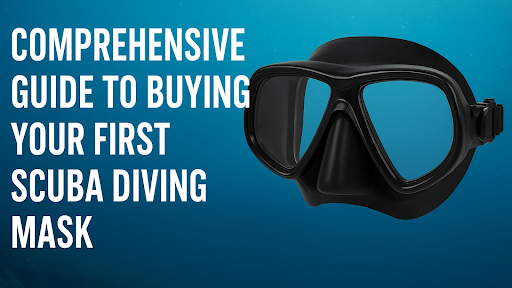
A scuba mask is essential personal protective equipment designed to provide clear underwater vision and also serves as your primary safety link underwater. Unlike swimming goggles, the mask covers your nose as well. A perfect mask is one you can wear and forget about. On the other hand, a leaky, poor-quality or ill-fitting mask can ruin your underwater experience. Your mask serves two main functions:
- Provides air space for your eyes to focus.
- Equalises the air pressure inside the mask to prevent mask squeeze due to increased water pressure during descent.
Now, let’s choose the perfect mask for you.
Table of Contents
Safety and Material Quality
When you join LBDivingKohTao for a Koh Tao diving course, you are briefed on safety and the basics on the very first day. Safety is as important as experience. So, your mask must meet diving safety standards.
Tempered Glass
Make sure that the mask lens is made of tempered glass to withstand underwater pressure. Don’t forget to check for the mandatory “T” or “Tempered” mark on the lens.
The Silicone Skirt
This part of the mask seals against your face. Soft and pliable hypoallergenic Liquid Silicone Rubber (LSR) provides the best seal. Avoid PVC (polyvinyl chloride), as this material is stiff, brittle, and prone to leakage. It can also crack and harden over time. Choose a high-quality skirt with a double-feathered edge seal to maximise sealing.
Nose Pocket
The mask’s nose pocket must be soft and easily accessible. It must allow you to pinch your nostrils closed to ensure proper equalisation of the ears.
Achieving the Perfect Fit
An ill-fitted mask is destined to leak. The following tips will help you achieve a perfect fit:
The Suction Test
Gently place the mask on your face without using the strap. Inhale lightly through your nose and remove your hand. Do not exhale. If the mask stays firmly on your face without any support, it fits perfectly. If it falls off, it means air has leaked and the mask is not the right fit for you.
Comfort Check
While the suction effect due to inhaling holds the mask in place, it should not press painfully on your nose or upper lip. This pressure can cause headaches and leakage as you descend. The pressure around the brow and the bridge of the nose should be gentle and uniform.
Facial Hair and Contours
Facial hair, especially moustaches, can break the seal. You can use silicone grease to temporarily fill the gaps if you have moustaches. If you have a narrow face, then opt for a low-volume mask. If you have a flatter nose bridge and wider cheekbones, invest in a specialised “Asian fit” design.
Frame, Volume and Vision
Frame
A framed mask uses a polycarbonate plastic frame that holds the lens. A framed mask makes it easy to swap optical lenses. In a frameless mask, the silicone skirt is bonded or moulded directly onto the tempered glass lens. As a result, the mask is lighter, lower-volume, and compact.
Volume
A low-volume mask sits very close to your face. It is:
- Easy to clear of water
- Requires less air to equalise on descent
- Designed to provide a broader peripheral view
A high-volume mask sits further from the face. The mask:
- Gives a more open, panoramic feel
- Provides a broader peripheral view
Field of View
A single-lens mask offers an uninterrupted panoramic view to maximise an open feeling. A two-lens mask features two lenses separated by the bridge of the nose. The lenses sit closer to your eyes. This mask is an ideal choice for you if you require prescription lenses. A multi-lens mask has small side lenses to enhance peripheral vision.
Skirt Colour
A clear silicone skirt feels less claustrophobic as it allows the most light in. It also enhances ambient peripheral vision. However, exposure to UV can cause yellowing.
On the other hand, an opaque silicone skirt blocks side light to reduce internal glare and reflections.
| Integrated with the regulator for breathing, a full-face mask covers your entire face. |
Conclusion
A mask is one of the most essential pieces of equipment you need for a safe and enjoyable scuba diving experience. Best diving schools in Koh Tao, such as LA BOMBONA DIVING, help you make the right choices.
Join LA BOMBONA DIVING for scuba diving courses today!