
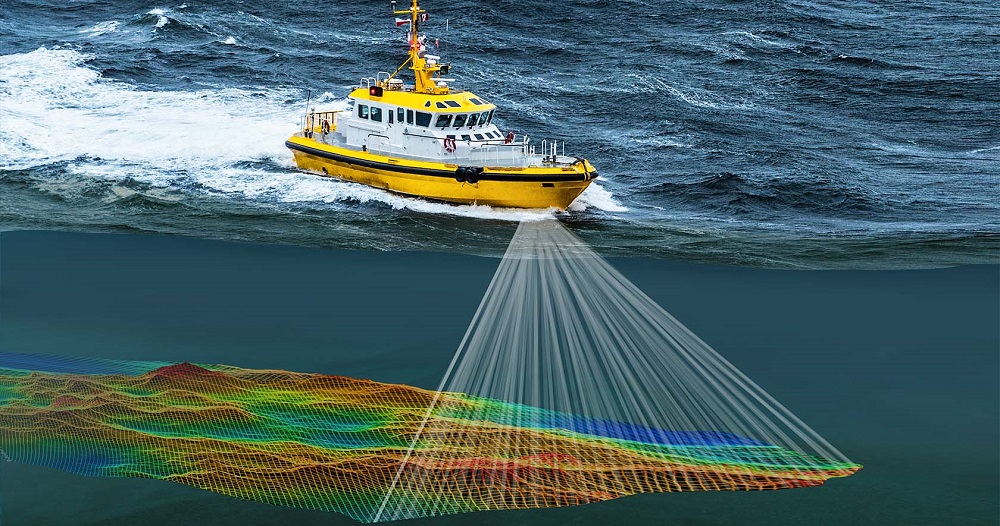
The oceans cover over 70% of the planet, yet much of their depths remain a mystery. Beneath the waves lies a complex landscape that holds the key to understanding ecosystems, supporting infrastructure, and unlocking sustainable development. This is where marine geospatial surveys come into play, offering precise insights into the seabed and its features.
Whether you’re mapping underwater terrain for renewable energy projects or ensuring safe navigation for shipping routes, these surveys provide critical data. They combine advanced technology with scientific expertise, helping you make informed decisions about marine environments. As the demand for sustainable ocean use grows, so does the importance of accurate and reliable marine geospatial information.
Table of Contents
What Are Marine Geospatial Surveys?
Marine geospatial surveys involve gathering and analysing data about underwater environments. You encounter detailed seabed mapping, coastal features, and water movements. These surveys rely on technologies like sonar, satellite imagery, and underwater LiDAR, all working to chart marine landscapes effectively. Your understanding of these techniques helps you see how the ocean’s complexities are decoded.
You might ask what makes these surveys significant. They’re fundamental for industries ranging from maritime navigation to offshore energy. Shipping companies depend on accurate seabed data to plan secure routes. Renewable energy developers utilise bathymetric details to select ideal places for wind turbines or tidal systems. Even in fisheries management, you will find geospatial mapping improving resource assessments.
Tools used during surveys are as diverse as their applications. Multibeam sonar captures the depth and shape of the seabed. Side-scan sonar reveals textures and material types. In the case that you explore sediment collection, coring tools provide samples for further study. There’s often integration of satellite-based systems to enhance coastal profiling.
While technical, the operations behind these surveys reveal immense detail. You will find survey vessels scanning the seafloor, drones capturing shoreline views, and autonomous systems mapping hazardous areas. Diverse data feeds are unified to produce reliable results. These are then mapped using Geographic Information Systems, helping decision-makers visualise marine spaces clearly.
You might consider their impact on sustainability. Tracking seabed stability, erosion trends, or biodiversity hotspots enables you to contribute to broader conservation goals. Changes in underwater ecosystems become easier to monitor with this technology, supporting measures that align with environmental preservation.
As someone curious about its broader implications, you should note how these surveys frame global marine challenges. Precision-driven, they offer insights that bridge scientific, environmental, and industrial needs. You will likely notice that marine geospatial surveys are often the foundation of informed oceanic exploration.
Importance Of Marine Geospatial Surveys
Marine geospatial surveys hold immense significance for understanding and managing underwater environments. You will find their applications span both environmental and economic domains, serving critical functions in these areas.
Environmental Applications
Data from marine geospatial surveys provides essential insights into marine ecosystems. Detailed seabed mapping can reveal biodiversity concentrations, helping you pinpoint areas requiring protection. Monitoring sediment transport and erosion trends assists in evaluating habitat stability and coastal resilience. In the case of rising sea levels or storm impacts, these surveys might guide adaptive measures to safeguard ecosystems. You will also notice they support pollution tracking, ensuring marine health assessments remain accurate and timely.
Economic Benefits
Marine industries, ranging from offshore energy to fishing, rely on survey data for planning and decision-making. Accurate bathymetry identifies optimal locations for energy infrastructures like wind farms and tidal systems, mitigating costs and risks. Similarly, secure navigation routes derived from geospatial data ensure operational safety for shipping companies. Fisheries benefit from identifying productive zones, which might enhance yield potential while preventing over-exploitation. Incorporating this information into projects can enhance efficiency and profitability across sectors.
Technologies Used In Marine Geospatial Surveys
Marine geospatial surveys depend on diverse technologies to uncover underwater landscapes and processes. These methods collect detailed data, enabling the precision and reliability required for decision-making.
Remote Sensing
You will find that remote sensing technology allows large-scale observation of marine environments from above. Satellite imagery captures surface characteristics like temperature, currents, and coastal changes, while aerial surveys offer high-resolution data for nearer-shore mapping. Passive sensors detect reflected sunlight or emitted thermal energy, and active systems like radar penetrate clouds and darkness. Combined, these approaches enhance your ability to monitor expansive marine areas efficiently.
Sonar Systems
Sonar systems reveal underwater details through sound propagation. Multibeam sonar provides precise depth and structure measurements by emitting sound waves in multiple directions. In contrast, side-scan sonar focuses more on texture and features of the seabed. Some operations might require sub-bottom profiling to detect layers beneath the sediment, useful for identifying buried structures. By deploying these tools, you gain clarity on underwater landscapes for various applications.
GPS And Mapping Tools
Your accuracy when pinpointing locations relies on GPS and mapping tools. Differential GPS enhances positional precision needed for offshore projects. By integrating GPS data with Geographic Information Systems, you can create layered maps that visualise marine topography and boundaries. Mapping software further processes this data, ensuring optimal charting for resource management, infrastructure placement, and navigation strategies.
Hydrographic Survey
A hydrographic survey charts water depths, shapes, and submerged features essential for marine operations. Depth measurement relies on tools like echo sounders, while tide gauges monitor vertical water movements that influence depth calculations. Working with these datasets, you may better plan navigational routes, infrastructure placement, or resource extraction activities, while enhancing safety and efficiency.
Challenges In Marine Geospatial Surveys
Geospatial accuracy faces several challenges due to the complexity of underwater environments and the reliance on evolving technology to achieve this type of hydrographic survey. Understanding these difficulties enhances the ability to figure out them effectively.
Environmental Factors
Environmental variability influences the performance of survey tools. Turbulent water movements, such as currents and tides, can disrupt equipment stability and affect data precision. Turbidity, or the cloudiness of water, reduces visibility for instruments like optical sensors, limiting their effectiveness in sediment-heavy regions. Temperature gradients also interfere with acoustic equipment, refracting sonar signals and impacting depth accuracy. In areas like polar seas, shifting ice floes and freezing conditions create additional obstacles, restricting survey operations and requiring more specialised equipment.
Technological Limitations
Technology used in marine surveys has its constraints. Acoustic systems, including sonar, struggle with signal attenuation over long distances, reducing their efficiency in deeper waters. Satellite data lacks the resolution needed for detailed seabed mapping, particularly in coastal zones. Autonomous and remotely operated vehicles depend on reliable communication links, which can fail in remote or deep locations. Compatibility issues between older equipment and evolving software also create operational inefficiencies, slowing down processing and reducing the overall reliability of survey outputs.
Last Thoughts
Marine geospatial surveys are indispensable for unlocking the mysteries of underwater environments while supporting sustainable and economic objectives. As technology progresses, these surveys will continue to refine our understanding of the oceans, enabling more precise data collection and fostering innovation across industries.
By addressing existing challenges and embracing advancements, you can contribute to the development of more efficient and accurate survey practices. The integration of cutting-edge tools and collaborative platforms ensures that marine geospatial surveys remain at the forefront of ocean exploration and resource management, paving the way for a more sustainable future.