
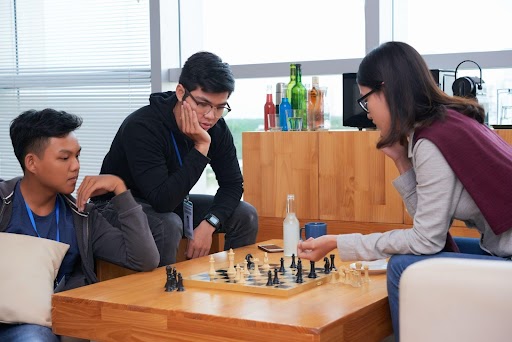
Chess is far more than a classic board game, it is a powerful learning tool that quietly shapes the way children think, plan, and interact with the world. When introduced in the right environment, chess helps children build focus, patience, creativity, and resilience. Enrolling kids in the best group chess lessons for beginners allows them to experience these benefits in a structured yet engaging way, where learning becomes both meaningful and enjoyable.
Unlike solitary practice, group chess lessons encourage shared discovery. Children learn not only from instructors but also from observing peers, exchanging ideas, and participating in friendly competition. This collective approach transforms chess into a holistic developmental experience rather than just a mental exercise.
Table of Contents
Chess as a Shared Learning Journey
Children naturally thrive in group settings. Whether in classrooms, sports teams, or creative workshops, shared learning fosters motivation and curiosity. Group chess lessons follow the same principle by turning individual thinking into a collaborative process.
When children learn together, they are exposed to different playing styles and thought processes. One child might focus on aggressive attacks, while another prefers careful defense. Observing these differences helps students understand that there is no single “right” way to think, only thoughtful decision-making. This openness strengthens adaptability and encourages flexible thinking from an early age.
Expert Guidance Shapes Strong Foundations
One of the greatest advantages of structured group lessons is access to skilled instructors who understand how children learn. Rather than overwhelming students with complex theory, experienced teachers break concepts into simple, digestible ideas.
In a group setting, instructors can demonstrate strategies on shared boards, highlight common mistakes, and answer questions that benefit everyone. This ensures that children build strong fundamentals instead of relying on trial and error. Over time, these foundations help young players develop confidence and clarity in their decision-making.
Learning Through Observation and Interaction
Children learn remarkably well by watching others. Group chess lessons create countless opportunities for observation, whether it’s seeing a clever tactic played by a classmate or analyzing why a certain move didn’t work.
Discussing games together helps children articulate their thoughts, improving communication skills alongside chess understanding. Explaining a move or listening to another child’s reasoning encourages deeper comprehension. Learning becomes an active process rather than passive instruction, which significantly enhances retention and engagement.
Encouraging Healthy Competition and Sportsmanship
Competition is an essential part of chess, but it must be introduced thoughtfully, especially for children. Group lessons create a safe environment where competition feels friendly rather than intimidating.
Playing against peers teaches children how to handle both wins and losses gracefully. They learn that mistakes are part of growth and that improvement matters more than immediate success. This mindset builds emotional resilience and helps children develop a balanced attitude toward challenges, both on and off the board.
Sharpening Focus and Critical Thinking
Chess is a game of concentration, foresight, and logic. In group lessons, children are encouraged to stay mentally engaged, not only during their own games but while observing others as well. This sustained attention gradually strengthens focus and mental discipline.
Over time, children learn to evaluate multiple possibilities before making decisions. They begin to anticipate consequences, analyze patterns, and think several steps ahead. These cognitive skills often carry over into academics, improving problem-solving abilities and independent thinking.
Encouraging Creative Thinking Through Play
Beyond logic and calculation, chess also nurtures creativity. In group lessons, children are encouraged to explore unconventional moves, experiment with ideas, and learn that innovation often comes from curiosity rather than certainty. Exposure to different game situations inspires imaginative thinking, helping young players understand that problem-solving is not always linear. This creative freedom allows children to trust their instincts while still grounding their choices in thoughtful analysis.
Building Social Confidence and Communication Skills
One of the most valuable outcomes of group chess lessons is social development. Chess classes bring together children with shared interests, creating natural opportunities for interaction and friendship.
Discussing strategies, sharing ideas, and participating in group activities help children become more confident communicators. For shy or introverted children, chess offers a structured way to engage socially without pressure. The board becomes a common language, making interaction feel comfortable and purposeful.
The Flexibility of Online Group Chess Learning
With the rise of digital education, Online group chess lessons for kids have made quality instruction accessible to families everywhere. These virtual classrooms preserve interaction while offering flexibility and convenience.
Online group lessons often allow children to participate at their own comfort level. Visual boards, guided discussions, and real-time feedback keep sessions engaging and effective. This format is especially beneficial for children who may feel anxious in traditional classrooms, offering a supportive and familiar learning environment.
Teaching Discipline and Long-Term Thinking
Chess rewards patience and planning. Group lessons reinforce these qualities through regular practice and structured progression. Children learn that improvement takes time and that thoughtful effort leads to meaningful results.
The routine of attending lessons, solving problems, and playing games builds discipline. Children begin to understand the value of preparation and persistence, skills that are essential for long-term success in academics, hobbies, and personal goals.
Emotional Growth Through Guided Play
Chess naturally exposes children to emotional experiences, from excitement to disappointment. In group lessons, instructors help children process these emotions constructively.
By normalizing mistakes and emphasizing learning, children develop emotional intelligence. They learn empathy by seeing others struggle and perseverance by working through challenges together. These lessons extend far beyond chess, shaping balanced and confident individuals.
Why Group Chess Lessons Leave a Lasting Impact
Group chess lessons combine intellectual challenge with social engagement and emotional growth. They transform chess into a tool for holistic development rather than a purely competitive pursuit.
Group chess learning also helps children develop a sense of accountability. Regular participation teaches them to respect time, follow structured sessions, and stay committed to personal improvement. Watching peers progress can be motivating, encouraging students to practice consistently and set realistic goals. This shared sense of responsibility builds independence and reinforces the idea that growth is a gradual process shaped by effort and consistency.
Children who learn chess in group environments often develop stronger thinking skills, better communication, and greater self-confidence. These benefits continue to grow over time, making group chess education a valuable investment in a child’s overall development.
Conclusion
Group chess lessons help children develop strategic thinking, emotional balance, and social confidence through shared learning experiences. Platforms like Chessbrainz reflect this philosophy by offering structured group-based instruction that focuses on fundamentals, interaction, and steady progress. Such approaches allow children to grow intellectually while enjoying the journey of learning chess together.