
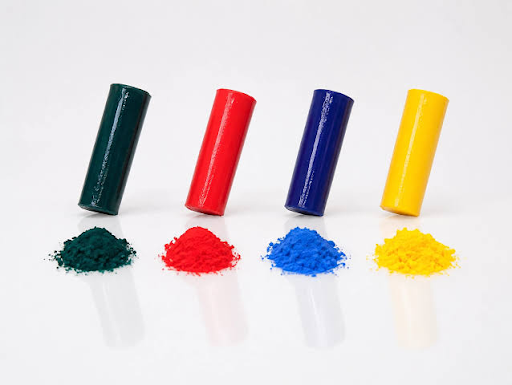
Silicone Masterbatch and PBT Masterbatch are both used with engineering plastics, but they are not two versions of the same thing. One is a functional additive that modifies surface and flow behaviour; the other is a colour or additive concentrate built for a specific polymer. Understanding their separate roles helps processors specify correctly.
Table of Contents
Silicone Masterbatch: A Functional Additive
A silicone masterbatch delivers ultra-high-molecular-weight silicone into a polymer to modify its surface and processing characteristics. Rather than adding colour, it changes how the material behaves during and after processing.
Reported benefits, which depend on formulation and dosage, include:
- Improved surface slip and lower friction
- Better scratch and abrasion resistance
- Smoother processing and mould release
- Enhanced surface finish
It is used across several polymers where surface performance or processing ease matters, including polyolefins and engineering plastics. Because silicone can influence downstream operations such as printing or bonding, and because the effect scales with loading, the right silicone masterbatch should be selected against the specific property you need and tested for side effects.
PBT Masterbatch: Built for a Specific Polymer
A PBT masterbatch is designed for polybutylene terephthalate, an engineering thermoplastic prized for dimensional stability, chemical resistance, and electrical properties. Here the masterbatch is defined by the polymer it serves, carrying colour or functional additives on a PBT-compatible carrier that withstands the material’s processing conditions.
PBT is common in:
- Electrical and electronic connectors and components
- Automotive parts
- Precision engineering components
Because PBT processes at high temperatures and is used in demanding applications, its masterbatch needs heat-stable pigments and additives plus a compatible carrier. Moisture management also matters, since PBT can be sensitive to it during processing.
Different Roles, Not Alternatives
| Aspect | Silicone Masterbatch | PBT Masterbatch |
| Defined by | Function (surface/processing) | Base polymer (PBT) |
| Primary purpose | Modify slip, wear, processing | Colour/function in PBT |
| Works across | Multiple polymers | PBT specifically |
| Key concern | Effect on downstream steps | Heat stability, dispersion |
The two can even appear together: a PBT part might use a PBT masterbatch for colour and a silicone additive for surface performance, provided compatibility and loading are managed.
Selection Considerations
For silicone masterbatch:
- Define the target property, whether slip, wear resistance, or processing aid.
- Check effects on printing, painting, or bonding.
- Confirm compatibility with your base polymer.
For PBT masterbatch:
- Ensure heat-stable additives suited to PBT processing.
- Confirm dispersion quality for consistent appearance and performance.
- Follow moisture-management guidance.
In both cases, validate with trials, since results depend on formulation, dosage, and processing.
Processing Notes
Silicone dosage needs to be controlled; too much can cause issues in secondary operations. PBT requires careful temperature and moisture control to avoid defects. A supplier experienced with each product can advise on avoiding these pitfalls.
Conclusion
Silicone masterbatch and PBT masterbatch play distinct parts in engineering plastics: one modifies function across polymers, the other serves a specific high-performance resin. Specifying correctly means identifying whether you need a surface or processing effect or a PBT-tailored concentrate, then confirming compatibility and validating through trials. Clear goals and supplier guidance keep the two roles from being confused.
Frequently Asked Questions
What is silicone masterbatch used for?
Silicone masterbatch is used to improve surface properties, reduce friction, enhance slip, and support smoother processing of plastic products.
Does silicone masterbatch improve the surface finish of PBT?
Yes. A suitable silicone masterbatch can improve surface smoothness, reduce friction, and provide better surface feel in PBT applications.
Can silicone masterbatch improve the processing of PBT?
Yes. It can help reduce processing friction and improve material flow, depending on the formulation and processing conditions.
Is silicone masterbatch suitable for high-temperature plastics?
Yes. Silicone masterbatch grades designed for high-temperature polymers are suitable for applications where thermal stability is required.
Can silicone masterbatch be used with PBT masterbatch?
Yes. Silicone masterbatch and PBT-compatible colour masterbatch serve different functions and can be used together when their formulations are compatible.
Does silicone masterbatch change the colour of PBT?
No. Silicone masterbatch is primarily used for functional performance. Colour is controlled separately through a suitable colour masterbatch.