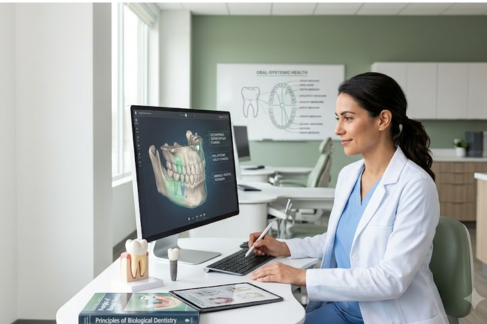
Biological dentistry is an approach to dental care that considers oral health as part of a person’s overall health. It focuses on understanding the relationship between the mouth, the body, dental materials, lifestyle, and other factors that may affect patient well-being.
As interest in biological dentistry grows, more dental professionals are exploring specialized education and certification programs. But what does a biological dentistry certification program actually include? While programs can differ in structure and curriculum, most focus on developing a broader understanding of patient biology and integrating biological principles into dental practice.
Table of Contents
Understanding the Foundations of Biological Dentistry
A biological dentistry certification program generally begins with the basic principles of biological dentistry. Dentists learn how this approach differs from conventional dental treatment and why factors beyond the teeth and gums may be considered during patient assessment.
The training may introduce concepts such as:
- Oral-systemic health
- Patient biology
- Biocompatibility
- Biological risk factors
- Preventive dental care
- Nutrition and lifestyle factors
- Dental materials
- Inflammation and healing
The goal is to give dentists a foundation before moving into more specialized clinical topics.
Learning About the Oral-Systemic Connection
One important area of biological dentistry education is the relationship between oral health and overall health.
The mouth is connected to the rest of the body through blood vessels, nerves, immune pathways, and other biological processes. Oral conditions can also involve inflammation and microbial activity.
Certification programs may therefore explore how dentists can consider a patient’s broader health when assessing oral conditions. This can encourage practitioners to look beyond an isolated dental problem and consider relevant medical history, lifestyle, nutrition, and other factors.
It is important to distinguish established evidence from emerging research when discussing these connections. A good training program should help dentists understand both what is well supported and where further research is needed.
Patient Assessment and Biological Factors
Biological dentistry training may also place emphasis on a more comprehensive patient assessment.
Instead of focusing only on the immediate dental complaint, dentists may learn to consider factors such as:
- Medical history
- Oral health history
- Diet and nutrition
- Lifestyle
- Existing medications
- Previous dental treatments
- Individual healing factors
- Environmental exposures
This approach can help dentists collect more complete information before developing a treatment plan.
Biocompatible Dental Materials
Dental materials are another important topic in many biological dentistry programs.
Dentists work with a wide range of materials, including restorative materials, cements, implants, and prosthetic components. Biological dentistry education may introduce the concept of biocompatibility and discuss how material selection can be considered alongside the patient’s individual circumstances.
Training may cover topics such as material composition, material properties, patient considerations, and metal-free or ceramic options.
The purpose is not simply to identify one material as suitable for every patient. Instead, dentists learn how material selection can become part of an individualized treatment-planning process.
Ceramic and Biological Implant Concepts
Some biological dentistry certification programs also include education related to implant dentistry.
Depending on the curriculum, dentists may learn about ceramic implants, implant materials, tissue response, treatment planning, and factors that can influence healing.
Ceramic implants, particularly zirconia implants, may be discussed as an alternative to conventional titanium implants in certain situations. Training can help dentists understand the characteristics, potential applications, and limitations of different implant systems.
Clinical training requirements vary considerably between certification programs, so dentists should review the specific curriculum before enrolling.
Nutrition, Lifestyle, and Patient Wellness
Another area that may appear in biological dentistry education is the role of nutrition and lifestyle.
Nutrition can influence many aspects of health, including immune function, metabolism, and tissue maintenance. Lifestyle factors such as sleep, stress, physical activity, and smoking can also be relevant to overall health.
Biological dentistry programs may teach dentists how to discuss these factors with patients and recognize when a patient may benefit from collaboration with another healthcare professional.
Dentists should remain within their professional scope when providing health-related guidance. Collaboration with physicians, nutrition professionals, or other qualified practitioners may be appropriate when broader health concerns are involved.
Treatment Planning and Clinical Application
Certification programs are not limited to theory. Many aim to help dentists understand how biological principles can be incorporated into clinical decision-making.
Training may cover:
- Patient evaluation
- Risk assessment
- Treatment planning
- Material selection
- Preventive strategies
- Communication with patients
- Post-treatment considerations
The practical component can help dentists understand how concepts learned during training may apply to real-world dental cases.
The exact level of hands-on training depends on the program. Some programs are primarily educational, while advanced programs may include clinical requirements, case documentation, mentorship, or practical training.
Certification and Professional Development
A biological dentistry certification program may conclude with an assessment, examination, case review, or other requirements. Successful completion can result in a certificate or certification according to the organization’s standards.
Dentists should carefully review what a certification represents. Certification from a private training organization is different from a government-issued professional license or a dental degree. The eligibility requirements, continuing education credits, renewal rules, and clinical requirements can also differ between organizations.
Choosing the Right Biological Dentistry Certification Program
Before enrolling, dentists should look at several factors. These include the instructors’ qualifications, curriculum, clinical components, learning format, certification requirements, continuing education credits, and evidence supporting the educational material.
It is also useful to determine whether the program matches the dentist’s existing experience and professional goals.
Conclusion
A biological dentistry certification program can cover much more than basic dental procedures. Depending on the organization, it may include biological dentistry principles, the oral-systemic connection, patient assessment, biocompatible materials, ceramic implants, nutrition and lifestyle factors, treatment planning, and clinical applications.
For dentists considering this type of education, understanding the curriculum and certification requirements is an important first step. A well-structured program can provide a framework for exploring biological dentistry and applying relevant concepts within appropriate clinical practice.

